
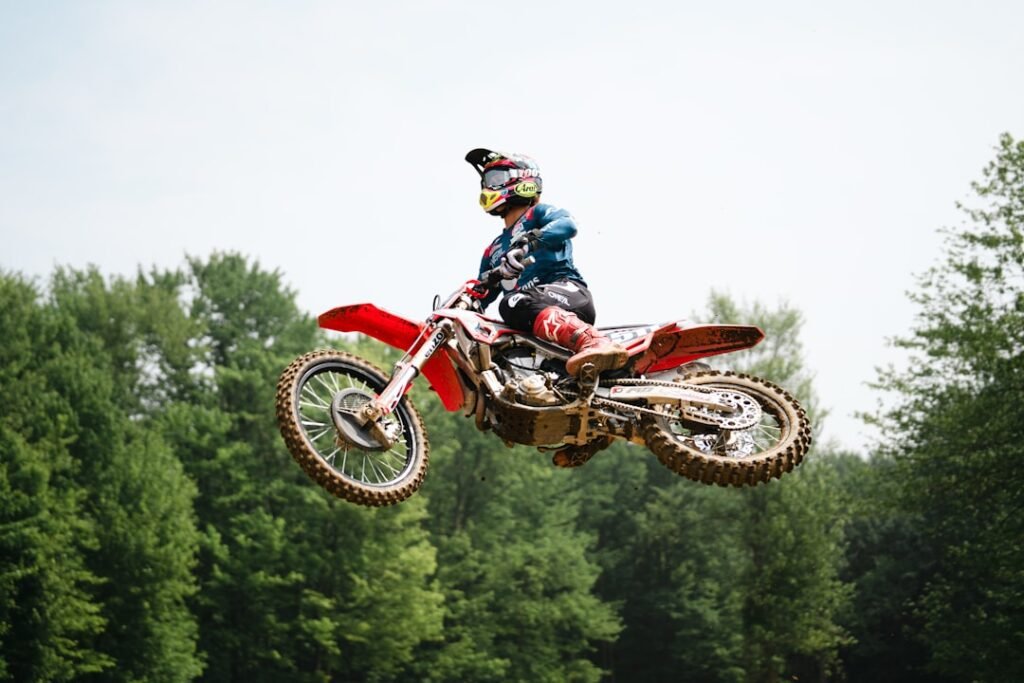
Why Dirt Bikes Are the Ultimate Gateway to Off-Road Adventure
Dirt bikes are lightweight, off-road motorcycles designed for riding on unpaved surfaces like trails, tracks, and rugged terrain. They feature long-travel suspension, knobby tires, and high ground clearance. Here’s a quick overview:
- Types: Motocross (MX), Enduro, Trail, Dual-Sport, and Pit Bikes
- Engine Sizes: 50cc for kids to 450cc+ for experts
- Price Range: $1,500 for youth models to $10,000+ for racing bikes
- Key Uses: Recreational riding, competitive racing, family activities
- Legal Status: Most are Off-Highway Vehicles (OHV) for designated areas
In an age of digital distractions, dirt bikes offer a powerful way to connect with nature, build skills, and experience the pure fun of off-road adventure. The dirt bike market is now valued at over $10.5 billion globally, with options for every rider, from beginner-friendly trail bikes to race-bred motocross machines.
This guide covers everything you need to make an informed decision: the different types of bikes, how to choose the right one for your skill level and budget, essential safety gear, basic maintenance, and the legalities of where you can ride.
I’m Mark Satoshi, and I’ve spent years helping riders at Anqi E-Bikes, from first-time buyers to experienced racers. My goal is to provide expert guidance to make your dirt bike journey as smooth and enjoyable as possible.
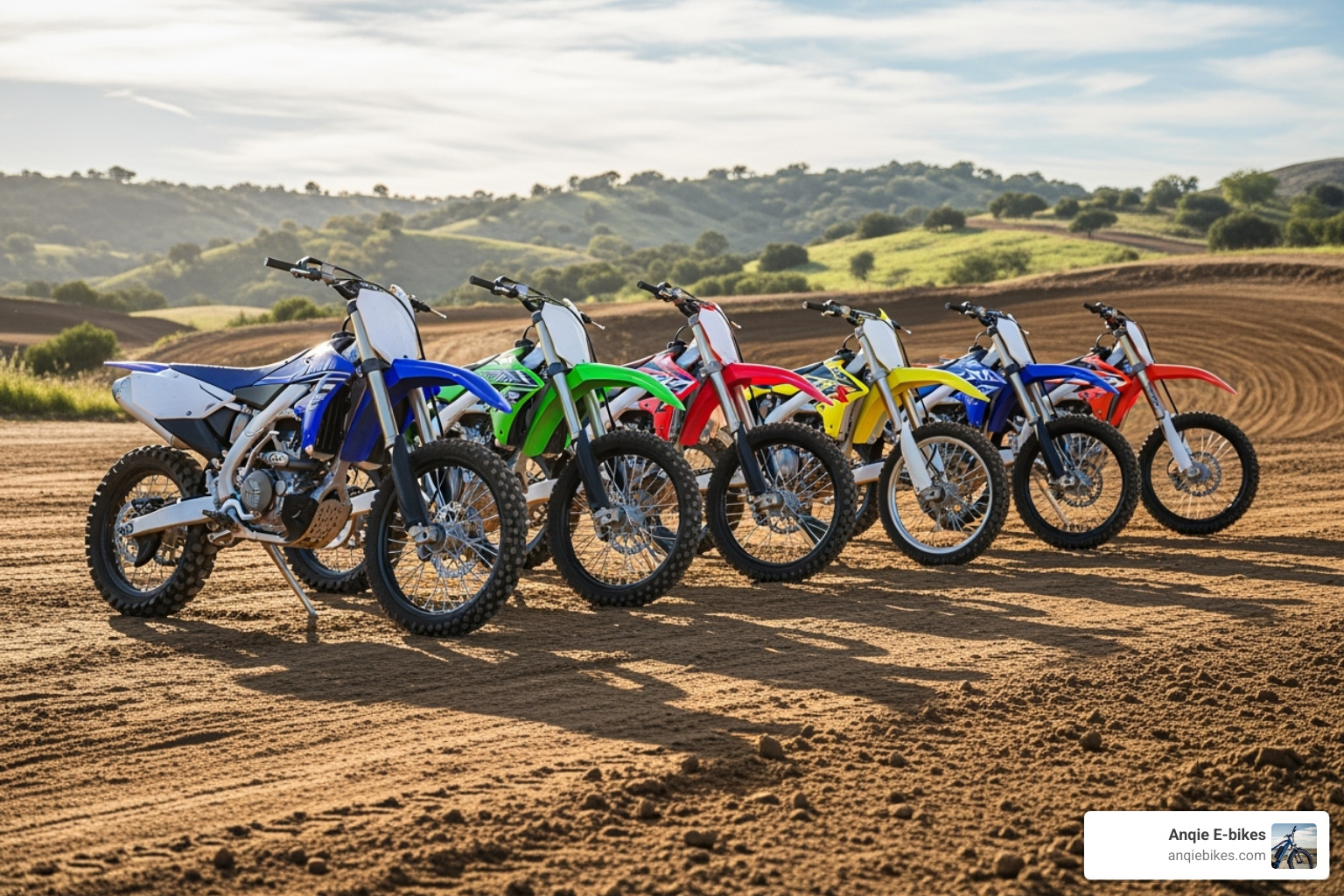
Understanding the World of Dirt Bikes
Dirt bikes are purpose-built for the untamed places where pavement ends. Their defining features—long-travel suspension to absorb bumps, knobby tires for grip, and high ground clearance to clear obstacles—reflect a single mission: off-road adventure.
Unlike street motorcycles, which are built for comfort and public road compliance with mirrors, signals, and horns, dirt bikes strip away these features to save weight and maximize performance. This is why most are sold as Off-Highway Vehicles (OHV) and are not street-legal from the factory. For detailed reviews and race coverage, Off-Road Motorcycle Reviews, Gear, And Races is an excellent resource.
Choosing the right category is crucial, as each type is engineered for a specific kind of riding. You don’t want a race bike for a casual trail ride, or vice versa.
The Main Types of Dirt Bikes
The dirt bike universe is diverse, with a machine for every purpose. Here’s how the main categories break down.
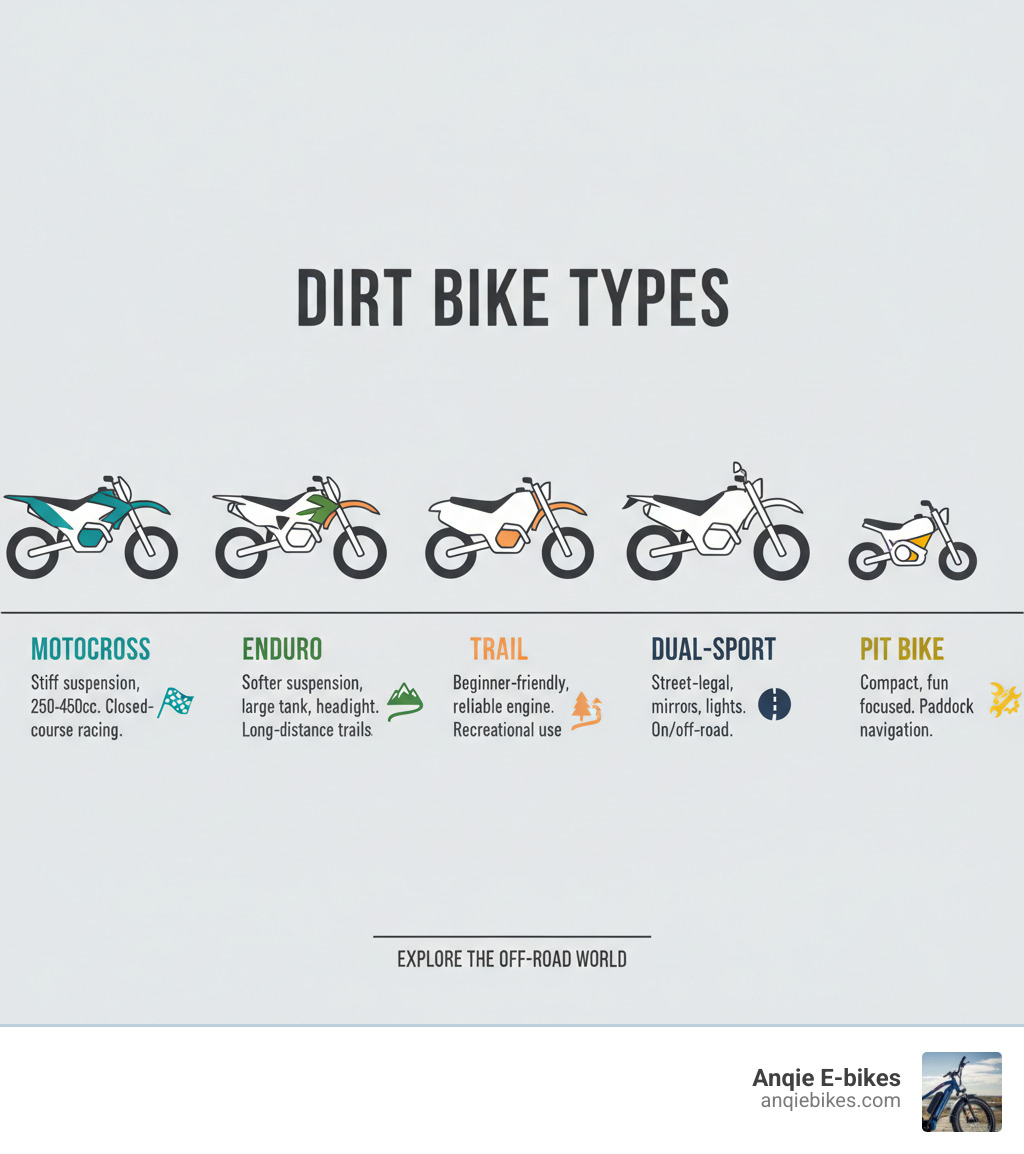
Motocross (MX) bikes are built for one thing: winning races on closed-course tracks. They have stiff suspension for big jumps, lightweight frames, and explosive power from 250cc to 450cc engines. They lack lights, signals, or even a kickstand to keep weight at a minimum.
Enduro bikes adapt motocross agility for long-distance trail riding. They feature softer suspension for comfort, wider-ratio transmissions for varied terrain, and larger fuel tanks. Many include headlights and taillights for all-day adventures, like the Vitacci Raven 250 Dual Sport Enduro Dirt Bike.
Trail bikes are perfect for recreational riders and beginners. They prioritize reliability, comfort, and ease of use over raw speed. With predictable power and lower seat heights, they are forgiving and confidence-inspiring. The Trailmaster TM11 110cc Dirt Bike is a great example for younger riders.
Dual-sport bikes are the versatile option, street-legal machines that can handle both pavement and trails. Equipped with mirrors, lights, and a license plate mount, they let you ride from your home to the trailhead. For more on these adaptable bikes, see this information on dual-sport motorcycles.
Pit bikes are compact, affordable, and fun. Originally used to get around race pits, these smaller bikes are perfect for backyard fun, learning basic skills, or for experienced riders who want a playful machine to mess around on.
How to Choose Your Perfect Ride
Choosing a dirt bike is about matching the machine to your skill, size, and riding goals. At Anqie E-bikes, we’ve seen how the right bike can make all the difference. Ask yourself three questions: What is my skill level (beginner, intermediate, expert)? Does the bike fit me (can I touch the ground and lift it)? And what do I want to do with it (race, explore trails, or casual fun)?
Your intended use should be the primary driver of your decision. Price-wise, youth models start around $1,500, mid-range bikes for adults are typically $3,000-$6,000, and high-performance race machines can exceed $10,000.
Key Features to Consider
Once you know your needs, focus on these technical details.
Engine Size (cc): For young beginners, 50cc-110cc engines are ideal, like our Mototec Thunder 50cc 2 Stroke Kids Gas Dirt Bike. As skills grow, 125cc-250cc engines offer a great balance of power and control, a range where our 125cc Dirt Bike For Sale collection shines. For experts, 450cc+ engines deliver maximum power but demand skill and respect.
Engine Type: The 2-stroke vs. 4-stroke debate is classic. 2-strokes are lighter and have a snappier power delivery but are louder and require mixing oil with gas. 4-strokes offer smoother, more predictable power, are quieter, and don’t require fuel mixing, making them a favorite for beginners.
Suspension: Good suspension absorbs bumps and jumps. Softer settings are better for trail comfort, while stiffer setups are for racing. Adjustable suspension is a plus, allowing you to fine-tune the ride as you improve.
Brakes: Modern dirt bikes should have hydraulic disc brakes front and rear for powerful, reliable stopping in all conditions. Drum brakes are outdated.
Seat Height & Weight: A lower seat height allows you to plant your feet, boosting confidence. A lighter bike is easier to handle, pick up after a fall, and less tiring to ride.
Gas-Powered vs. Electric Dirt Bikes
The dirt bike world is seeing a quiet revolution with the rise of electric models. The choice between gas and electric depends on your priorities.
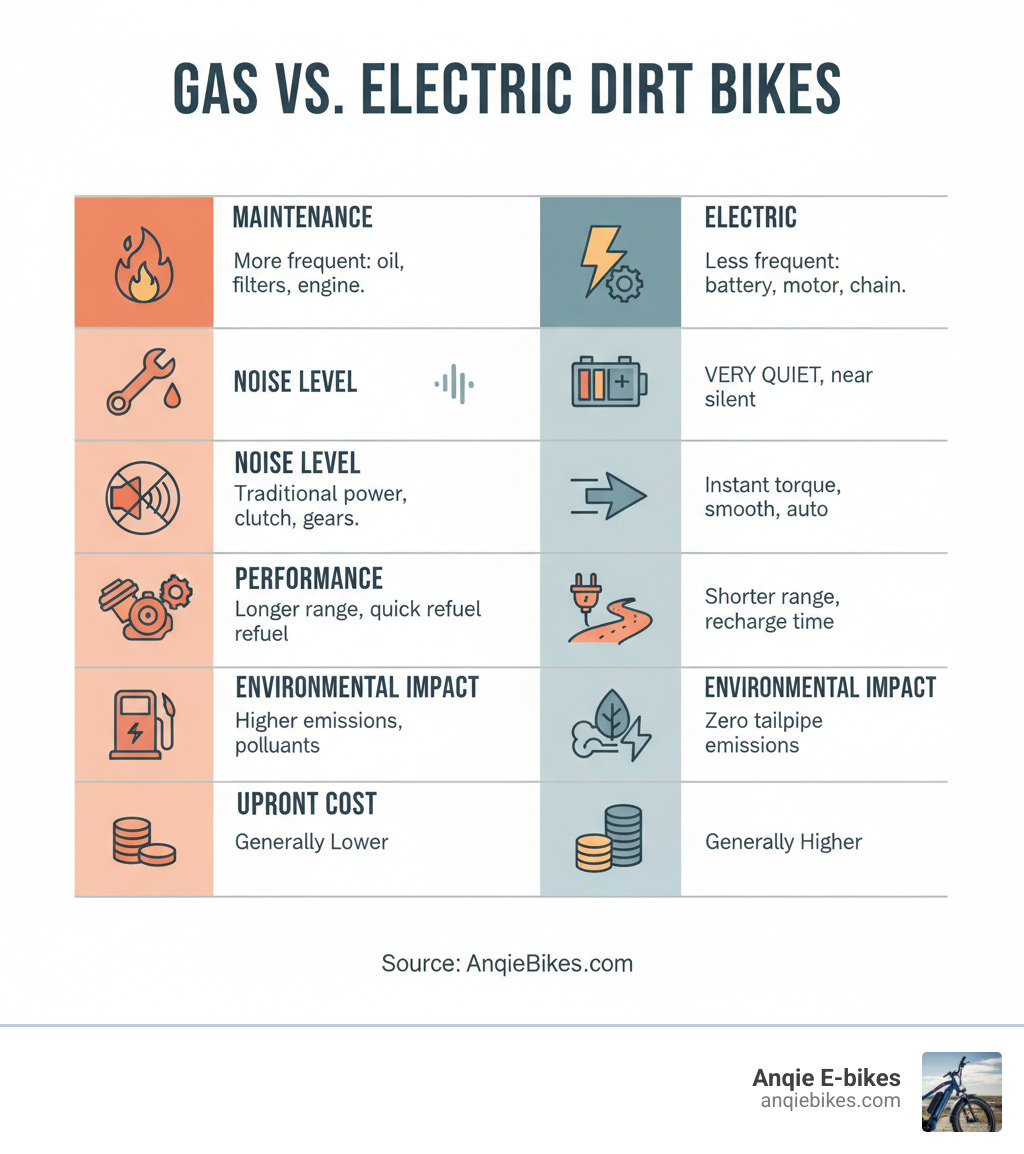
| Feature | Gas-Powered Dirt Bikes | Electric Dirt Bikes |
|---|---|---|
| Maintenance | More frequent: oil changes, air filter cleaning, fuel system checks, engine rebuilds. | Less frequent: battery care, motor checks, chain lubrication, brake maintenance. |
| Noise Level | Loud, distinctive engine roar. | Very quiet, almost silent operation. |
| Performance Characteristics | Traditional power delivery, often requiring clutch and gear management; wide range of engine sizes. | Instant torque, smooth power delivery; often single-speed or automatic; can feel very responsive. |
| Riding Range | Limited by fuel tank size; quick refueling. | Limited by battery capacity; longer recharge times; range extenders available. |
| Environmental Impact | Emissions from burning fossil fuels; noise pollution. | Zero tailpipe emissions; quieter operation; battery disposal considerations. |
| Upfront Cost | Generally lower for entry-level models, higher for high-performance. | Often higher upfront cost due to battery technology, but declining. |
Gas bikes offer the traditional experience: the sound, the smell, and the ability to refuel in minutes. They require more maintenance like oil changes and filter cleaning. Electric bikes are silent, offer instant torque, and are simpler to maintain. However, they have a limited range and require hours to recharge. For families in noise-sensitive areas, electric models like the Mototec 24v 500w Gazella Electric Dirt Bike In Stock are a fantastic, low-maintenance option.
Top Dirt Bikes for Beginners and Youth
Starting on the right bike is key to falling in love with the sport. Beginners need machines that build confidence.
For the youngest riders (ages 4-7), a 50cc bike with an automatic transmission is perfect. They are light, low, and have gentle power, like the Mototec Thunder 50cc 2 Stroke Kids Gas Dirt Bike.
Kids aged 8-12 are often ready for 80cc-110cc models with semi-automatic transmissions, which introduce shifting without a clutch. The Trailmaster TM11 110cc Dirt Bike and Tao Motor DB24 107cc Semi-Automatic Dirt Bike are excellent choices for this stage.
For teens and adult beginners, 125cc-150cc bikes with a manual clutch are the way to go. They teach fundamental skills and have enough power for real trails while remaining forgiving. The most important factor is ensuring the rider can comfortably touch the ground, as this is the foundation of control and confidence.
Safety First: Essential Gear and Riding Precautions
When you’re learning to ride dirt bikes, falling is part of the process. Every rider, from beginner to pro, takes tumbles while navigating rocks, ruts, and other obstacles. Understanding this reality means preparing for it, not taking unnecessary risks.
At Anqie E-bikes, we believe the thrill of off-road riding must be paired with smart preparation. The inherent risks of the sport make proper safety gear and precautions non-negotiable. The single most important precaution is to ride within your limits. Start slow, master the fundamentals like throttle control and braking, and gradually build your skills. The riders who progress safely become the most confident and capable in the long run.
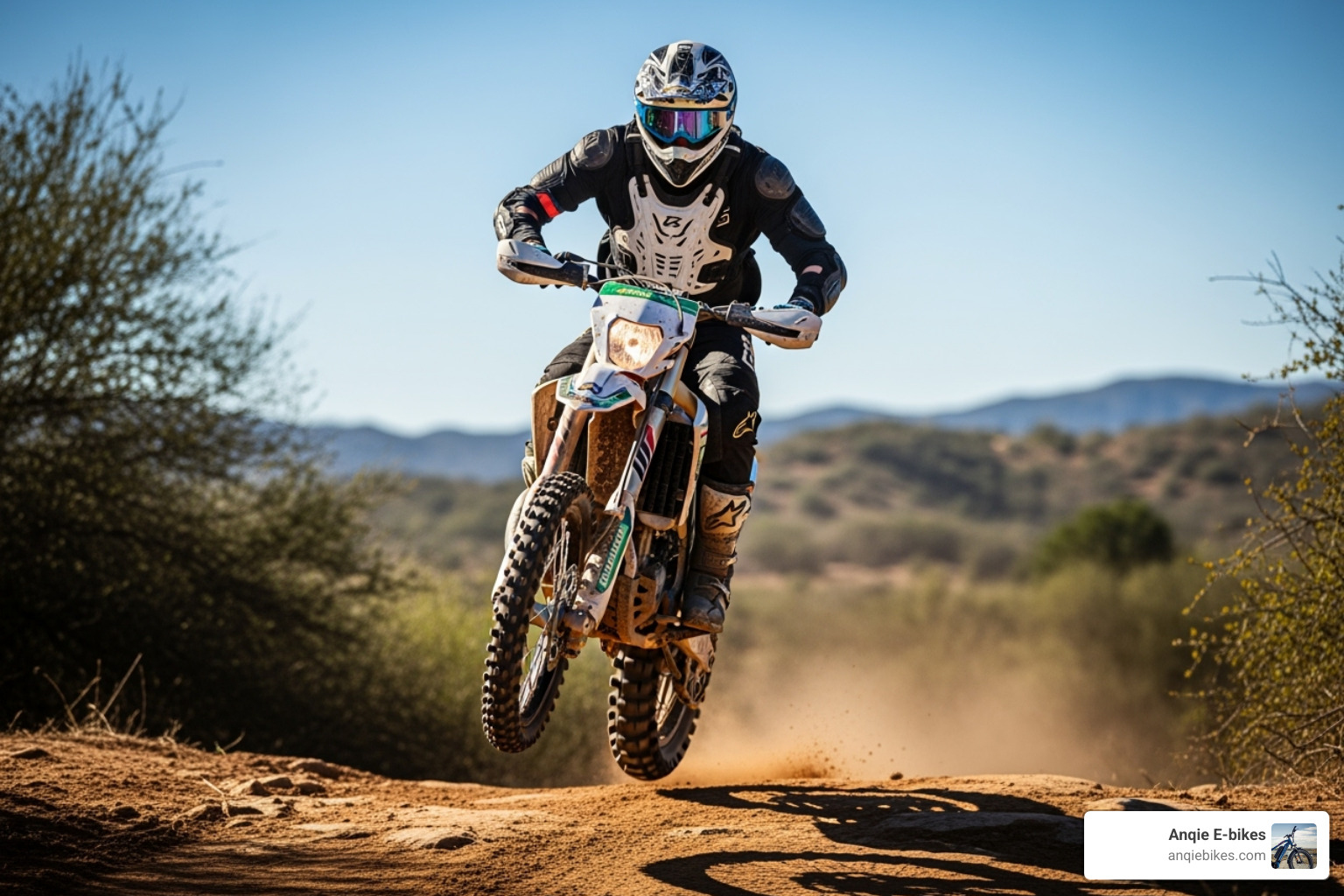
Essential Dirt Bike Safety Gear
Think of safety gear as your personal shield. Proper equipment can turn a serious injury into a minor incident. Here’s what you need before every ride:
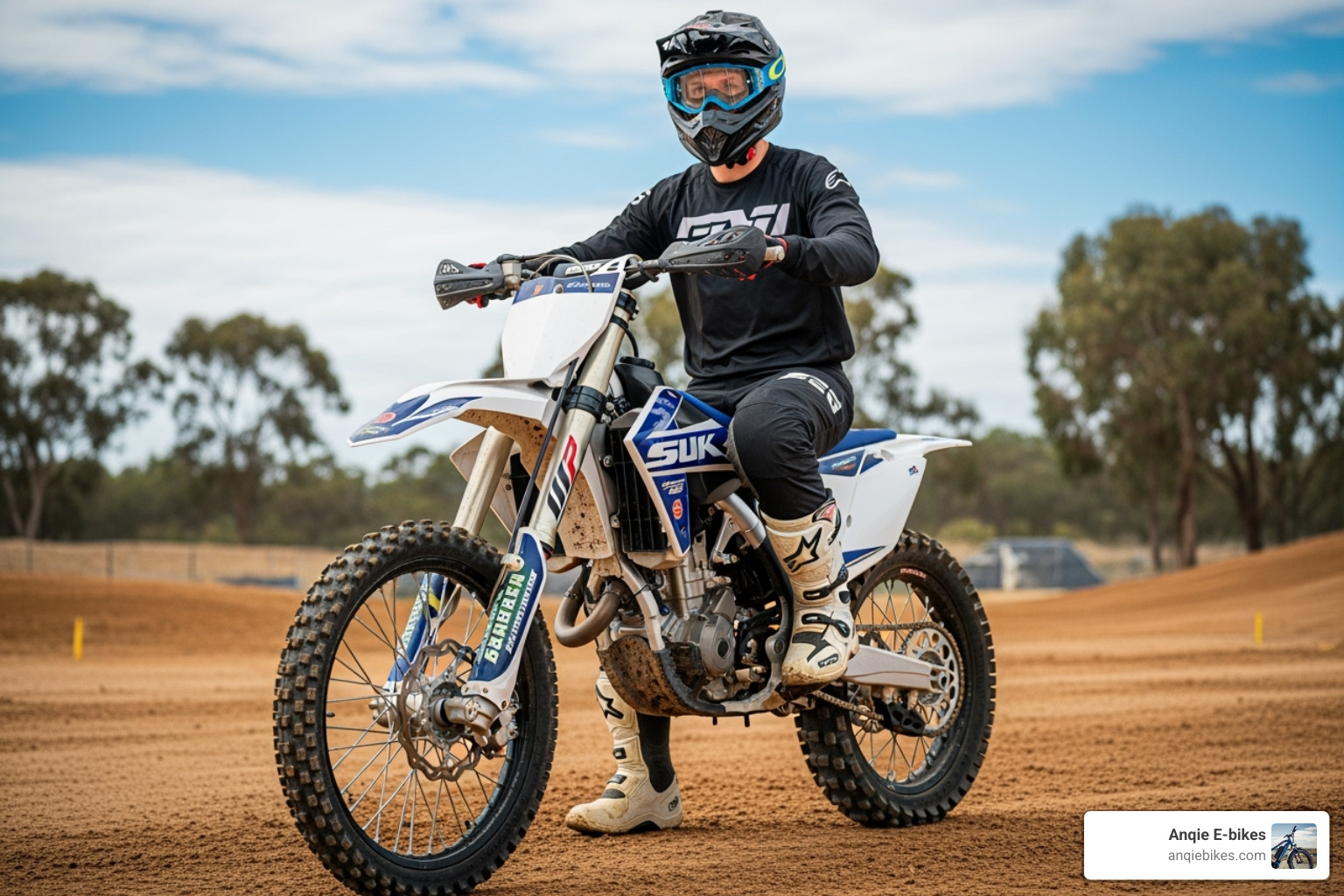
Helmet: A DOT or ECE approved full-face helmet is non-negotiable. It protects your chin and jaw and can save your life.
Goggles: Protect your eyes from dust, rocks, and debris. They also reduce glare and wind, improving visibility on the trail.
Boots: Off-road specific boots provide crucial ankle support and shin protection, preventing common twisting injuries.
Gloves: Improve your grip, reduce vibration, and protect your hands from blisters and impacts during a fall.
Body Armor: A chest protector shields your torso from impacts. Knee and elbow guards protect your joints from hard hits. For more aggressive riding, a neck brace helps reduce the risk of serious spinal injuries.
Riding Apparel: Durable, abrasion-resistant jerseys and pants designed for dirt biking allow a full range of motion while offering an extra layer of protection.
This gear is essential for every ride, every time. Investing in quality safety equipment is an investment in your long-term enjoyment of this incredible sport.
The Dirt Biker Lifestyle: Benefits, Maintenance, and Legalities
Buying a dirt bike is more than a purchase—it’s an entry into a lifestyle of adventure, fitness, and community. The global dirt bike market has surpassed USD 10.5 billion, and at our Brooklyn, NY location, we see how it brings families and individuals together.
The dirt biking community is incredibly welcoming. Whether at a local track or on a trail system, you’ll find riders eager to share tips and celebrate a shared passion for two-wheeled exploration.
Benefits of Riding
The benefits of dirt biking extend far beyond the thrill. It’s a full-body workout that builds core strength, stamina, and balance. The intense focus required to steer terrain acts as a form of active meditation, providing powerful stress relief and a deep connection with nature. As a family activity, it offers genuine, unplugged time together, creating lasting memories and teaching valuable lessons in perseverance and safety.
Basic Dirt Bike Maintenance
A well-maintained dirt bike is safer, more reliable, and more fun. While we offer strong after-sales support at Anqie E-bikes, knowing these basics is empowering.
- Post-Ride Cleaning: Washing your bike removes dirt and grime that cause premature wear and makes it easier to spot potential issues.
- Air Filter: Clean your air filter regularly, especially after dusty rides, to prevent engine damage.
- Oil Changes: Follow your owner’s manual for oil change intervals to keep internal components lubricated.
- Chain Care: Keep your chain clean and lubricated to reduce friction and wear.
- Pre-Ride Checks: Before every ride, check your tire pressure, brakes, and controls. These simple habits prevent most common mechanical problems.
Legal Requirements for Riding Dirt Bikes
Understanding where you can legally ride is crucial. Rules vary by location, so always research local regulations.
Most dirt bikes have OHV (Off-Highway Vehicle) status, meaning they are for off-road use only and lack street-legal equipment. Legal riding locations generally fall into three categories: designated public trails (often requiring a permit), private property (with the owner’s explicit permission), and registered MX parks.
Registration and licensing requirements also vary. Many areas don’t require a motorcycle license for off-road riding, but your bike may need to be registered. Youth riders may have specific supervision requirements. Check with your local DMV or transportation office for details. For example, California OHV equipment regulations outline specific rules that may differ from your area. Researching these rules ensures your adventures remain safe and hassle-free.
Conclusion
You now have a solid foundation for entering the exciting world of dirt bikes. We’ve covered the types of machines, how to choose one, essential safety gear, and the basics of maintenance and legalities.
The key takeaway is that dirt biking is an accessible sport for anyone with a desire for adventure. Whether you’re a parent getting kids outdoors or an adult seeking a new challenge, there’s a path forward for you.
Remember these three things: 1) choose a bike that matches your current skill level, not your ego; 2) always invest in and wear proper safety gear; and 3) make basic maintenance a regular part of your riding routine. A well-cared-for bike is safer and more reliable.
At Anqie E-bikes, we’ve built our reputation on helping riders make smart decisions. From our Brooklyn, NY location, we serve the New York area with a quality selection of dirt bikes, expert advice, and strong after-sales support. We’re here to help you start a journey that could become a lifelong passion.
The trails are waiting.
Explore our complete collection of dirt bikes for sale and start your off-road adventure today!