
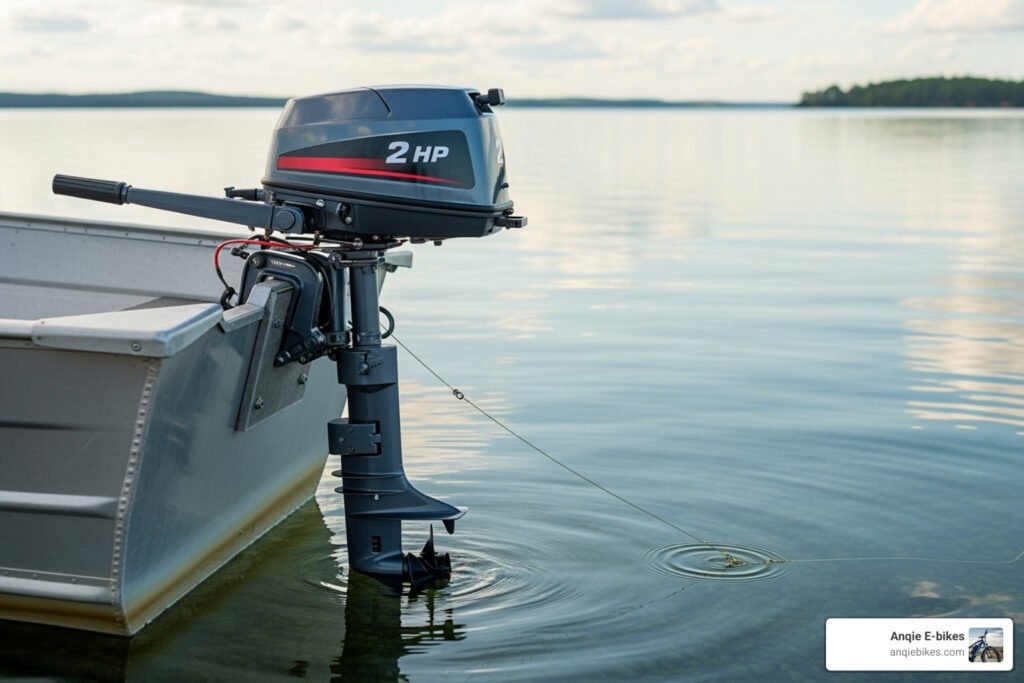
Why the 2hp 2-Stroke Outboard Remains a Portable Powerhouse
A 2hp 2 stroke outboard is a lightweight marine engine for small boats, dinghies, and canoes. Weighing under 10kg (22 lbs) with a 50-72cc engine, it offers an excellent power-to-weight ratio.
Key features:
- Weight: 9.8-10kg (21.6-22 lbs)
- Fuel System: Built-in 1.2L tank with pre-mixed fuel/oil
- Performance: 4-6 knots, quick acceleration
- Applications: Tenders, inflatables, car-toppers
- Price Range: $770-$1,130 new; $50-$400 used
- Popular Brands: Yamaha 2D, Parsun T2C, Suzuki DT2
The 2hp 2-stroke’s appeal is its simplicity. With fewer parts than a 4-stroke, it’s easy to maintain and repair. Its light weight allows for one-person operation, from carrying to mounting. Despite the rise of 4-stroke and electric options, these outboards are valued for their portability and simple mechanics. They provide reliable power for yacht tenders, canoes, or small sailboats without the weight of larger engines.
I’m mArk saToshi, and at Anqi E-Bikes, I’ve guided many customers to the right 2hp 2 stroke outboard. My experience across land and water power solutions has shown me why these compact engines remain favorites.
Why Choose a 2-Stroke? The Power-to-Weight Champion
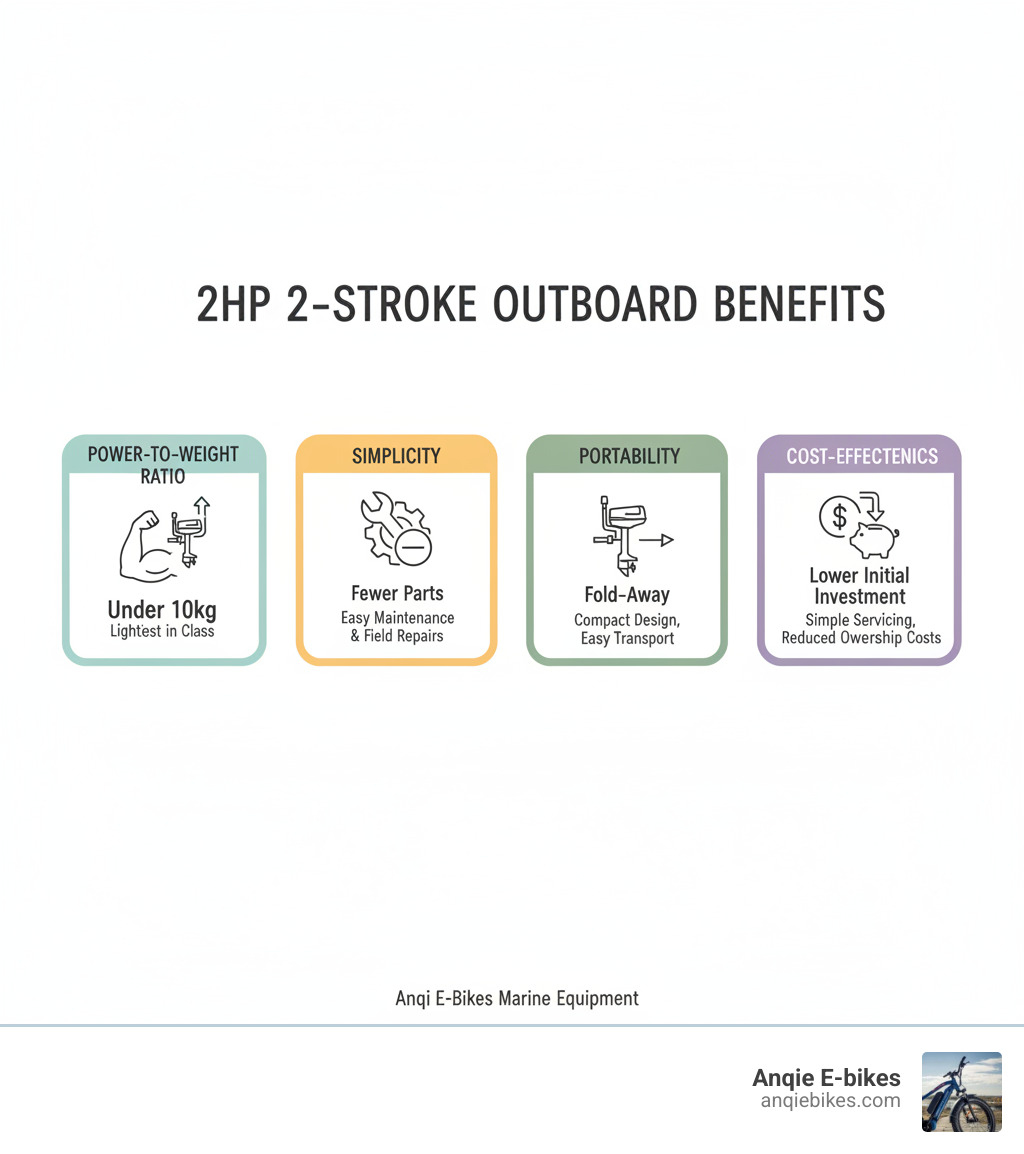
The enduring appeal of a 2hp 2 stroke outboard is its effortless portability. While 4-stroke and electric motors are popular, the 2-stroke’s straightforward design remains a key advantage. Its unbeatable power-to-weight ratio comes from a simpler engine cycle (two strokes vs. four), resulting in a lighter build with fewer moving parts. This means less weight on your transom and fewer potential points of failure.
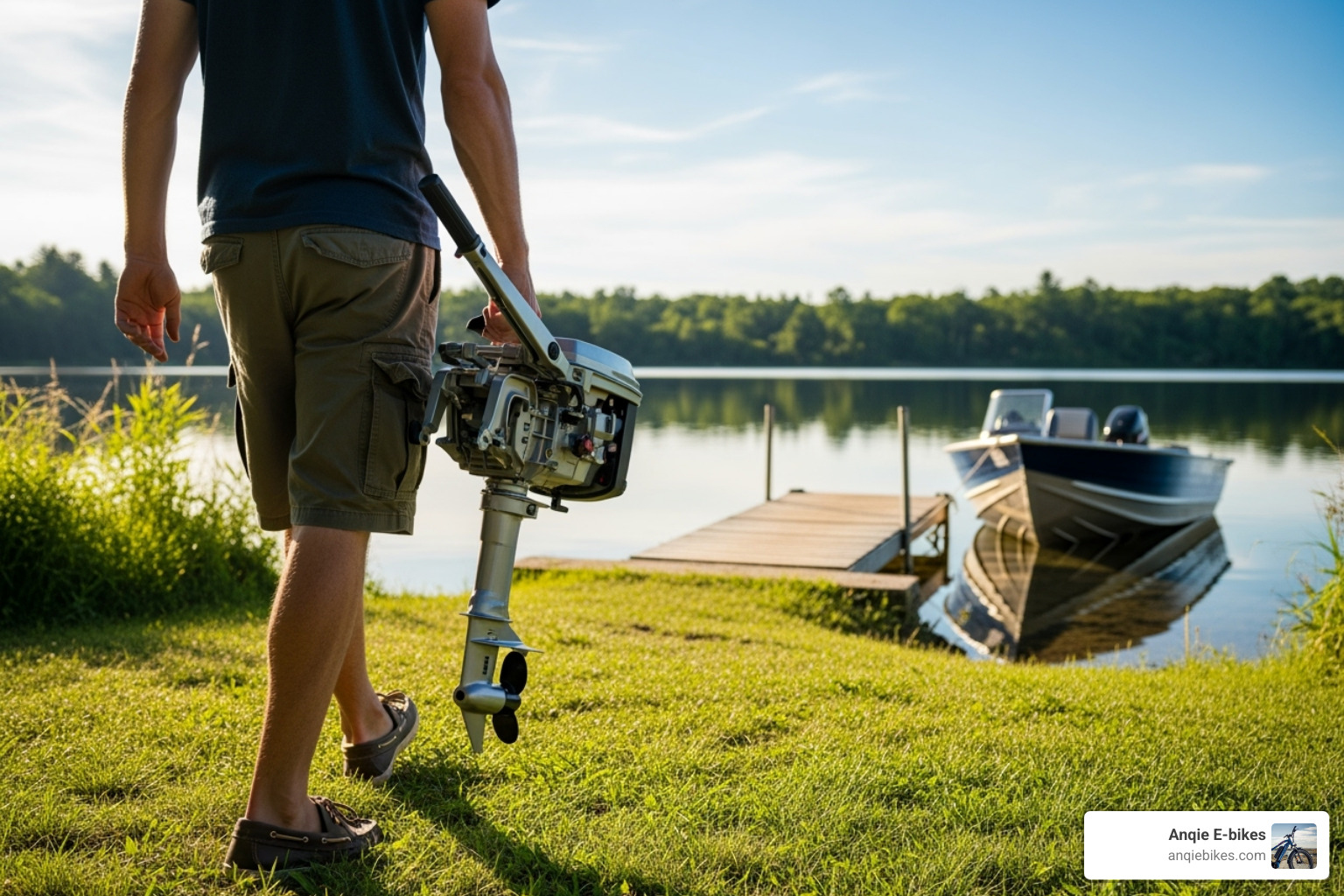
When issues arise on the water, the simple mechanics often allow for field repairs with basic tools. This, combined with a lower initial cost, makes them a practical choice for many boaters.
The Advantage of Simplicity
The lightweight design of a 2hp 2 stroke outboard is a game-changer for portability. Models like the Yamaha 2D and Parsun T2C weigh just 9.8kg (22 lbs), making them easy to carry, transport in a car trunk, and mount on a dinghy without assistance. Fold-away carry handles on many models further simplify transport.
This minimal weight also translates to straightforward maintenance. With no separate oil sump or complex valve adjustments, you spend less time on repairs and more time on the water. Despite their compact size, these motors deliver impressive power.
Performance Punch
A 2hp 2 stroke outboard offers a surprising performance punch with quick, eager throttle response. This is a distinct advantage over heavier 4-stroke alternatives.
The engine’s combustion cycle, sometimes improved with technologies like Yamaha’s loop charged induction, provides efficient power delivery. When you twist the throttle, the response is immediate. This superior acceleration is ideal for short, quick trips, like crossing a harbor or repositioning a dinghy. Some lightweight inflatables can even achieve a plane. A properly matched motor can push a small tender to around 6.5 knots (7.5 mph or 12 km/h), offering practical performance from an engine you can carry in one hand.
The Ultimate Guide to the 2hp 2 stroke outboard
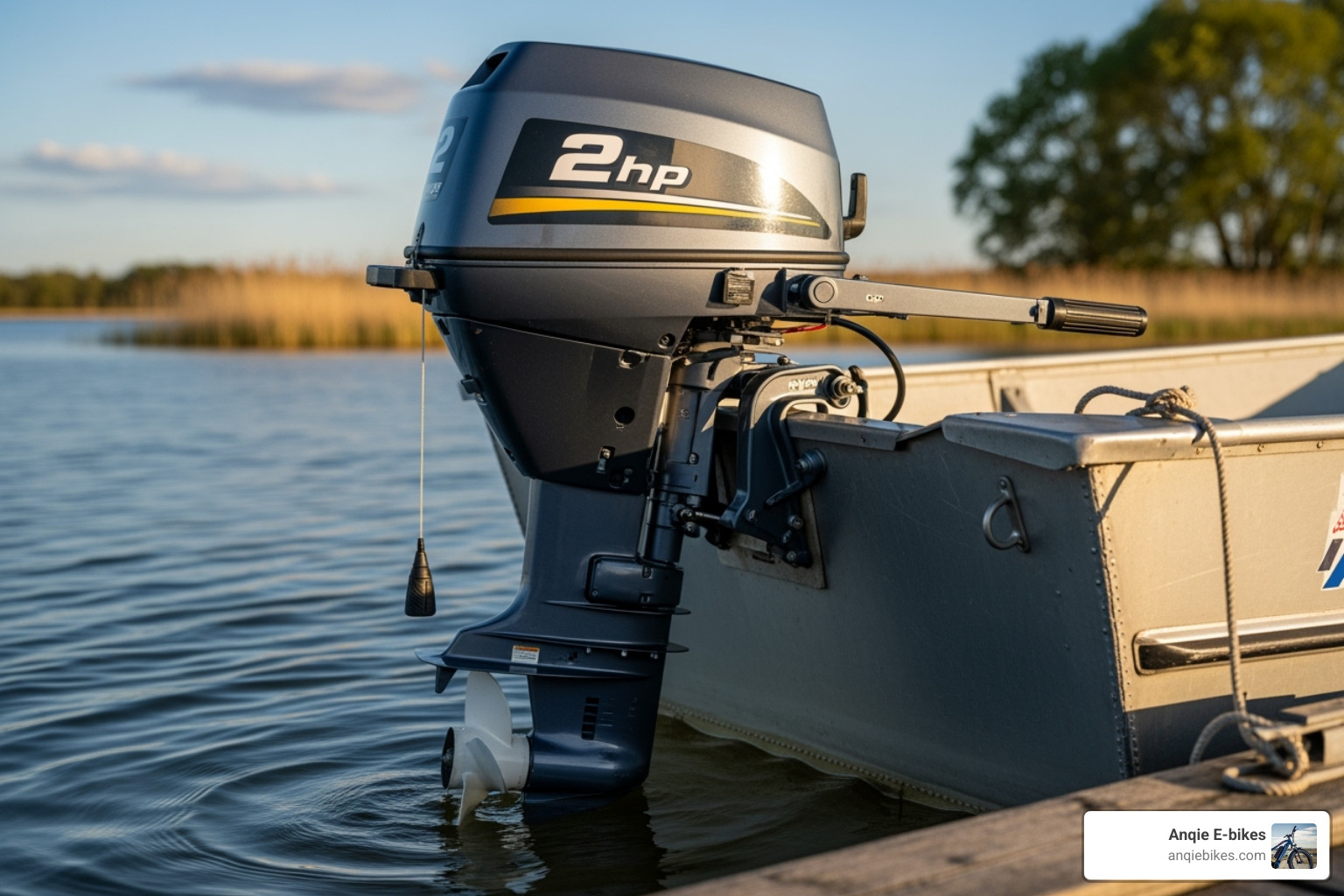
Understanding the practical details of a 2hp 2 stroke outboard helps you choose the right model. Let’s look at where these motors excel, what specs matter, and which brands are popular.
Ideal Applications and Uses
A 2hp 2 stroke outboard is purpose-built for small craft where portability and simplicity are key.
- Tenders and dinghies: Perfect for ferrying people and supplies from an anchored boat to shore.
- Canoes, kayaks, and small inflatables: Provides auxiliary power to cover more distance or fight a current. This Honda BF2.3 on Sea Eagle setup shows a similar practical application.
- Car-toppers: A sub-10kg motor is easy for one person to manage.
- Small sailboats: Serves as reliable auxiliary power for maneuvering in marinas.
- Fishing in calm waters: Quiet enough at low throttle but powerful enough to reposition quickly.
Key Specifications to Consider When Buying a 2hp 2 stroke outboard
When shopping for a 2hp 2 stroke outboard, focus on these key specifications:
- Weight: Prioritize models under 10kg (22 lbs) for maximum portability. The Yamaha 2D and Parsun T2C are excellent examples at 9.8kg.
- Displacement: Typically 50cc to 72cc. A larger displacement may indicate a more robust engine.
- Shaft Length: This is critical. A short shaft (15″/38cm) fits most small boats with transoms under 15 inches. A long shaft (20″/51cm) is for boats with higher transoms, like small sailboats. Always measure your transom height.
- Fuel Tank: Most have a convenient 1.2L built-in tank, offering about an hour of runtime at full throttle.
- Price: New models range from $770 to $1,130. Used motors can be found from $50 to $400, depending on condition.
Popular Brands and Models of the 2hp 2 stroke outboard
While new 2-strokes are less common in some regions, several reliable models are available.
- Yamaha 2D (2CMHS): Often considered the gold standard, it weighs 9.8kg with a 50.0cc engine. A key feature is its leaner 100:1 fuel/oil ratio, which reduces smoke and odor. It’s known for quality and is designed for tenders, inflatables, and small fishing boats.
- Parsun T2C: A popular choice offering great value. It also weighs 9.8kg but has a larger 72cc displacement. It uses a standard 50:1 fuel/oil ratio and is praised for its durability and reliability.
- Suzuki DT2: These older models are sought after on the used market. They weigh around 11kg with a 50cc displacement and are known for their robust construction.
At Anqie E-bikes, we help customers match these motors to their specific needs, ensuring they get the right balance of performance and portability.
Performance Face-Off: 2-Stroke vs. 4-Stroke vs. Electric
The small outboard market has evolved, with 4-stroke and electric motors offering compelling alternatives to the 2hp 2 stroke outboard. Here’s a head-to-head comparison to help you decide.
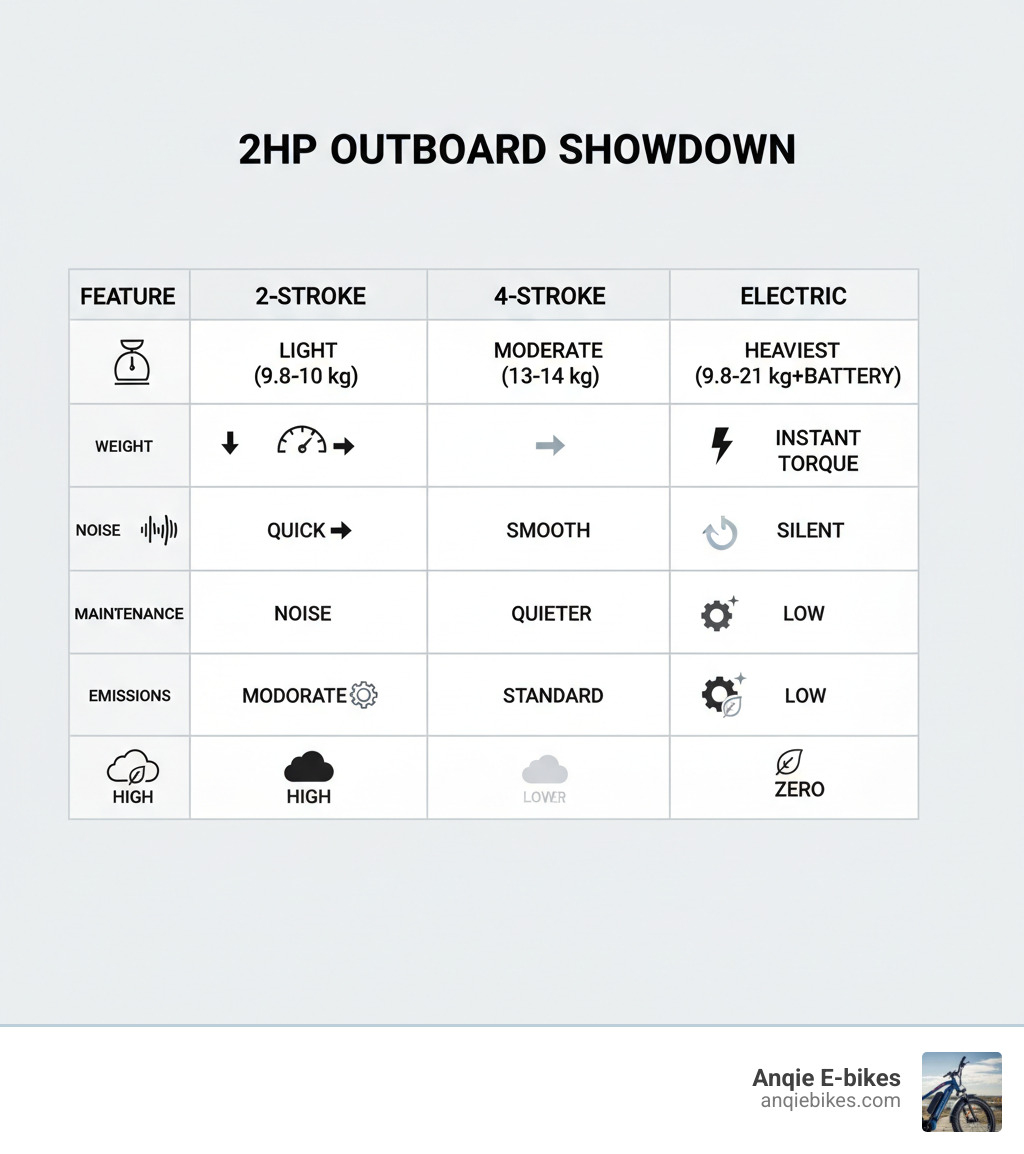
| Feature | 2hp 2-Stroke Outboard | 2-3hp 4-Stroke Outboard (e.g., Honda BF2.3) | 2-3hp Equivalent Electric (e.g., Torqeedo Travel) |
|---|---|---|---|
| Weight | Lightest (9.8-10 kg) | Moderate (13-14 kg / 29.5-31 lbs) | Heaviest (21.6-46.8 lbs with battery) |
| Acceleration | Excellent, quick throttle response | Smooth, good for sustained cruising | Instant, silent torque |
| Noise | Noticeable, higher pitch | Quieter, especially at idle | Near-silent |
| Maintenance | Simple, easy (carb cleaning, spark plugs, gear oil) | Moderate (oil changes, valve checks, water pump) | Very low (battery care, prop, seals) |
| Emissions | Higher, visible smoke (oil mix) | Lower, cleaner (CARB 3-STAR) | Zero direct emissions |
| Fuel/Power | Gas + oil mix, internal tank | Unleaded gas, internal tank | Integrated Li-ion battery |
| Runtime | ~1 hour WOT (1.2L tank) | ~1 hour WOT (1.1L tank) | 1-4 hours depending on speed/battery |
| Cost | Lowest initial | Moderate initial | Highest initial (battery cost) |
For a look at a modern 4-stroke, check out the Potrtable Honda BF2.3 Outboard we offer at Anqie E-bikes.
Acceleration and Top Speed
A 2hp 2 stroke outboard provides zippy, responsive acceleration, making it great for maneuvering in tight spaces. A 4-stroke like the Honda BF2.3 offers smoother, more measured power delivery ideal for steady cruising. Electric motors provide instant, silent torque for precise control. All three types achieve similar top speeds, typically 4-5 knots for everyday use and up to 6.5 knots under ideal conditions.
Weight and Portability
The 2hp 2 stroke outboard is the undisputed champion of portability at just 9.8-10 kg. A 4-stroke like the Honda BF2.3 is heavier at 13-14 kg (29.5-31 lbs), a noticeable difference when carrying it. Electric outboards vary; a Torqeedo Travel system can weigh over 20 kg with its battery, though lighter integrated models exist.
Noise, Emissions, and Convenience
The 2-stroke is the loudest and produces visible smoke and a distinct smell. 4-strokes like the Honda BF2.3 are quieter and much cleaner, earning CARB 3-STAR ratings for low emissions. Some 4-strokes also feature a centrifugal clutch for an automatic neutral. Electric motors are virtually silent with zero direct emissions, but their range is limited by battery life.
Care and Feeding: Maintenance, Reliability, and Best Practices
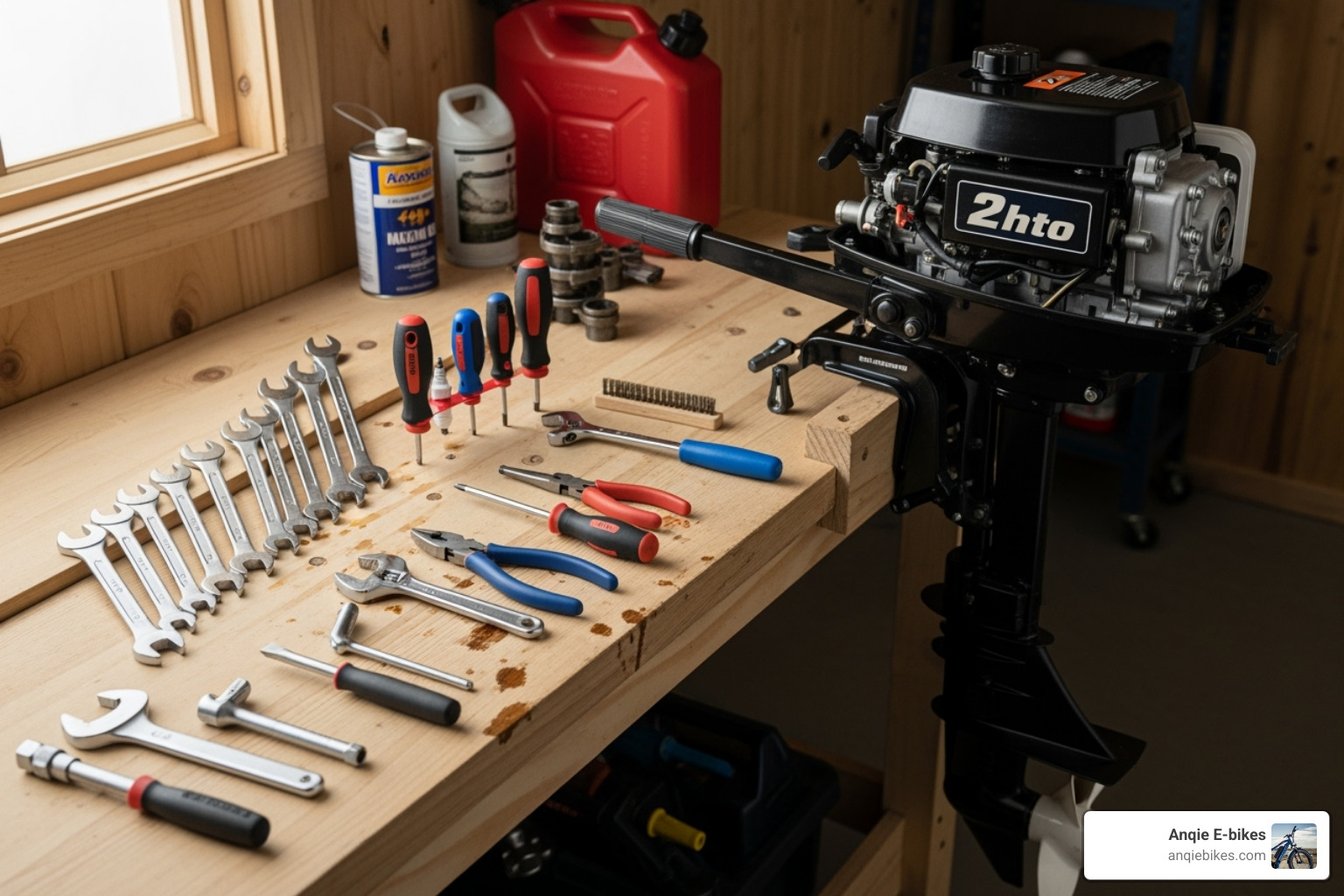
Proper care ensures your 2hp 2 stroke outboard will run reliably for years. Its simple design makes maintenance straightforward, but consistency is key.
Fuel and Oil Mixing: Getting the Ratio Right
The fuel-oil mixture is the lifeblood of a 2-stroke engine, providing essential lubrication. Always use a high-quality TC-W3 rated 2-stroke outboard oil.
Check your owner’s manual for the correct ratio. The Parsun T2C uses a common 50:1 ratio (50 parts gas to 1 part oil), while the Yamaha 2D specifies a leaner 100:1 ratio, which reduces smoke and odor.
Proper mixing is crucial. Mix in a separate, approved fuel container. Too little oil causes overheating and engine seizure. Too much oil fouls spark plugs and creates excess smoke and carbon buildup.
Essential Maintenance for Longevity
A few routine tasks will keep your 2hp 2 stroke outboard in top shape:
- Spark Plug: Inspect annually for fouling or wear. A clean plug ensures easy starting.
- Gear Oil: Change annually to lubricate the lower unit gears and check for water intrusion (milky oil).
- Water Pump Impeller: Check this rubber component every couple of years to ensure proper cooling.
- Carburetor Cleaning: A common fix for rough running or stalling, often caused by old fuel.
- Freshwater Flush: After every saltwater use, run the motor in a bucket of fresh water to prevent corrosion.
- Winterization: For long-term storage, use a fuel stabilizer, fog the engine, and store it upright in a dry place.
Consulting your owner’s manual is always the best practice. Resources like the Honda Owner’s Manual can provide general maintenance insights.
Common Issues and Lifespan
Most issues with a 2hp 2 stroke outboard are fuel-related and easy to fix.
- Stalling or rough running is often due to a dirty carburetor.
- Difficulty starting can be caused by a fouled spark plug or stale fuel.
- Water leaks from gaskets or seals require immediate attention to prevent serious damage.
The simple design of these motors improves their reliability. With proper care, a 2-stroke outboard can last for decades. Parts for older models can often be found on the used market. At Anqie E-bikes, we provide expert guidance to help you maintain your motor for the long haul.
Environmental Considerations and Regulations
The 2hp 2 stroke outboard is not known for being environmentally friendly. Its design, which burns an oil-and-fuel mixture, releases higher levels of hydrocarbons and carbon monoxide than 4-stroke engines. The visible smoke and odor are signs of unburned oil and fuel entering the environment.
In response, agencies like the EPA and CARB in North America have implemented strict emissions standards that have largely phased out the sale of new carbureted 2-stroke outboards. This trend is also seen in Europe and other regions, with the market shifting toward cleaner 4-stroke and electric alternatives.
However, the availability of new 2hp 2 stroke outboards varies by region. They remain popular in markets that prioritize low cost and mechanical simplicity. In regulated areas, they are primarily found on the used market.
Before buying any outboard, check your local waterway regulations, as some lakes and rivers have restrictions or bans on older 2-stroke engines. While a well-maintained 2-stroke running the correct fuel-oil ratio is less polluting than a poorly maintained one, the overall trend is toward cleaner technologies.
Frequently Asked Questions about 2hp Outboards
Here are answers to the most common questions we get at Anqie E-bikes about 2hp 2 stroke outboards and their counterparts.
How fast will a 2hp outboard motor go?
The speed of a 2hp 2 stroke outboard depends on the boat, weight, and conditions. For most small dinghies and inflatables, expect a comfortable cruising speed of 4-5 knots (4.5-5.5 mph). Under ideal conditions with a light boat, you might reach 6.5 knots (7.5 mph). These motors are designed for reliable propulsion, not high speed, but they are significantly faster than rowing.
What shaft length do I need for my boat?
Choosing the correct shaft length is critical for performance. Measure your boat’s transom height (from the top of the motor mount to the bottom of the hull).
- A short shaft (15 inches / 38cm) is for transoms under 15 inches high, which includes most dinghies, inflatables, and jon boats.
- A long shaft (20 inches / 51cm) is needed for transoms between 16 and 20 inches high, typical for small sailboats.
Can I still buy a new 2hp 2-stroke outboard?
The answer depends on your location. In the USA, Canada, and much of Europe, emissions regulations have mostly ended the sale of new carbureted 2-stroke outboards. In these regions, new options are primarily 4-stroke and electric models.
However, in other parts of the world, new 2hp 2 stroke outboards from brands like Yamaha and Parsun are still readily available. For boaters in regulated areas, the used market is the main source for 2-stroke motors. Always check local waterway rules before buying.
Conclusion: Is the 2hp 2-Stroke Right for You?
The 2hp 2 stroke outboard offers an unbeatable power-to-weight ratio, simple mechanics, quick acceleration, and a lower initial cost. It’s an excellent choice for powering a tender, canoe, or small inflatable, providing reliable performance without complexity.
However, there are trade-offs. These motors are louder and produce more emissions than their 4-stroke and electric counterparts. They also require mixing fuel and oil. With regulations making new models scarce in many regions, the market is shifting toward cleaner alternatives that may be heavier or more expensive.
So, who should choose a 2hp 2 stroke outboard? It’s ideal if you prioritize portability, simple maintenance, and snappy performance for short trips. If quiet operation and zero emissions are more important, a 4-stroke or electric motor might be a better fit.
At Anqie E-bikes, we pride ourselves on expert guidance and exceptional service for our entire range of e-bikes, dirt bikes, and outboard motors. Whether you’re in Brooklyn, NY, or across the US, our team is here to help you find the perfect fit for your needs and budget.
Ready to power your next aquatic adventure? We invite you to explore our full range of outboard motors and let us help you find the perfect match.