
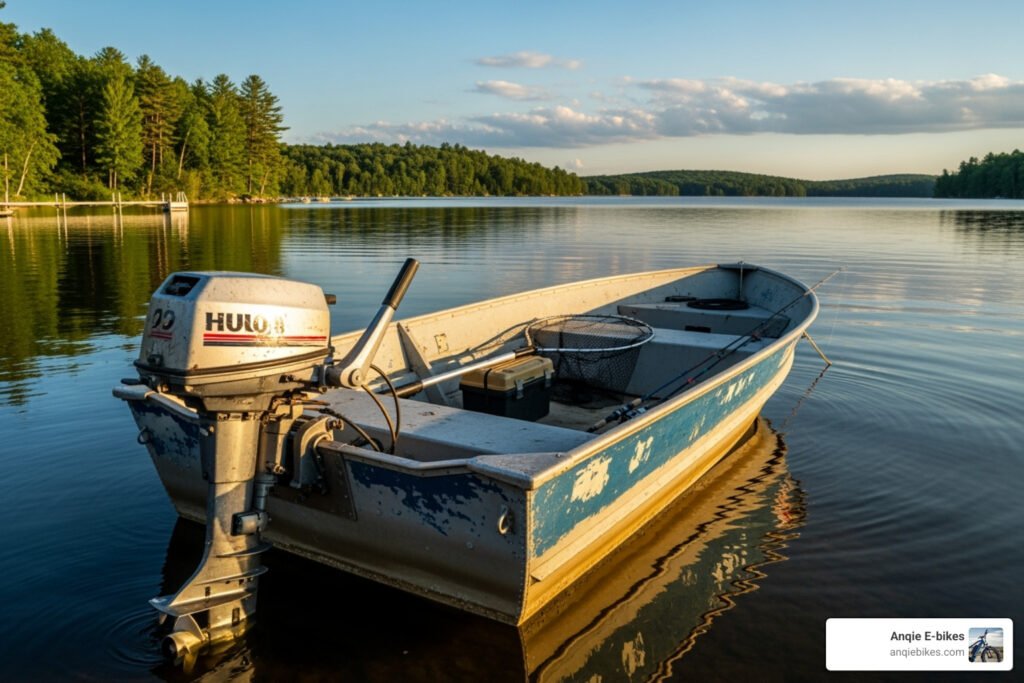
Why a Used Tiller Outboard Might Be Your Best Boating Investment
A used tiller outboard is a self-contained propulsion system where you steer the boat by moving the motor’s handle directly, rather than using a remote steering wheel. If you’re searching for one, here’s what matters most:
Quick Guide to Finding the Best Used Tiller Outboard:
- Horsepower Range: 9.9-60 HP covers most small boat needs
- Price Points: Expect $500-$1,500 for under 10 HP, $1,500-$4,000 for 15-40 HP
- Top Brands: Mercury, Yamaha, Honda, Suzuki, and Tohatsu offer proven reliability
- Key Check: Look for compression readings of 110-145 psi and clean lower unit oil
- Where to Buy: Specialized dealers like Anqie E-bikes, local marinas, or online marketplaces
The used outboard market is substantial, with thousands of tiller models available from vintage 1970s motors to nearly-new units. You’ll find both 2-stroke and 4-stroke options, with shaft lengths from 15″ to 25″, and prices that can represent significant savings over new models—sometimes 40-60% less for motors just a few years old.
At Anqie E-bikes, we have years of experience with marine equipment and helping boaters find reliable propulsion solutions. Our team has inspected countless used tiller outboards and guided customers through the buying process. Whether you’re powering a jon boat for duck hunting or adding auxiliary power to a sailboat, the right used tiller outboard delivers incredible value when you know what to look for.
Why Choose a Tiller Outboard? Advantages and Drawbacks
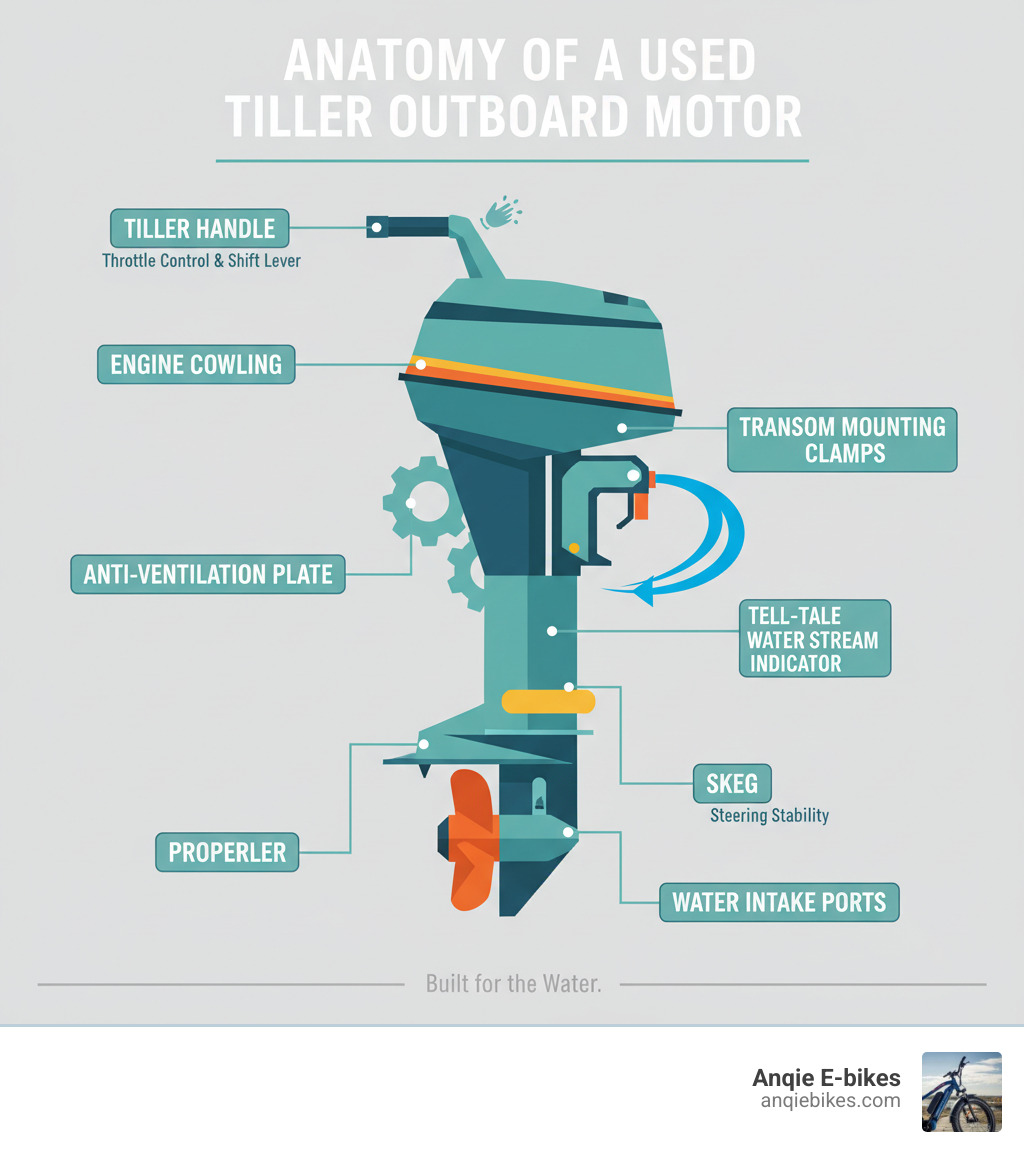
When shopping for a used tiller outboard, you’ll face a fundamental choice: tiller control or remote steering. For smaller boats, tiller control offers a unique, direct connection that remote steering can’t match. Instead of steering from a console, you’re right at the stern, feeling every response through the handle. It’s an intuitive way to operate your boat.
Beyond this connection, there are practical reasons why many boaters choose tiller outboards. Let’s look at their advantages and where they might not be the perfect fit.
Advantages of Tiller Control
- Simplicity: A tiller outboard avoids steering cables, hydraulic lines, and a wheel assembly. You mount it, connect the fuel, and go. Fewer parts mean fewer potential points of failure.
- Lower Costs: Tiller models are typically less expensive than comparable remote-steered motors. The savings can be significant, especially when you factor in the cost of steering components.
- More Space: Without a console, you gain valuable deck space for gear, coolers, or just moving around. On a 14-foot boat, this extra room makes a world of difference.
- Direct Feedback: The tiller handle provides instant feedback, allowing for micro-adjustments when trolling or navigating tight spots. There’s no delay between your input and the boat’s response.
- Easy Installation: Most tiller outboards can be mounted in under an hour with basic tools, eliminating the need to drill for cables or route hydraulic lines.
Drawbacks and Limitations
- Physical Effort: Fighting a crosswind or choppy water with a powerful motor can be physically demanding. It can turn a relaxing day into an unexpected workout.
- Exposure to Weather: At the stern, you’re exposed to rain, spray, and wind without the protection of a windshield.
- Horsepower Limits: While tiller models exist for over 100hp, they are best suited for motors up to about 90 HP. Beyond that, the steering forces can become difficult and unsafe to manage.
- Operator Fatigue: On long trips, manual steering can lead to fatigue in your arm and a lapse in concentration.
Best Boats for Tiller Outboards
Used tiller outboards are a perfect match for jon boats, where the open layout complements the simple setup. They are also ideal for aluminum fishing boats from 12 to 18 feet. Inflatables and dinghies benefit from the lightweight simplicity of smaller tiller motors, while skiffs and utility boats rely on their no-nonsense reliability. Many sailboat owners also use them for auxiliary power due to their compact and dependable nature.
Here’s how tiller control stacks up against remote steering:
| Feature | Tiller Control Outboard | Remote/Wheel Steering Outboard |
|---|---|---|
| Cost | Generally lower initial cost | Higher initial cost (motor + steering system) |
| Boat Space | Maximizes interior boat space | Requires console/helm, reducing usable space |
| Horsepower Suitability | Best for lower to mid-range (up to ~90 HP) | Suitable for all HP ranges, especially higher power |
| Installation Complexity | Simpler, often DIY-friendly | More complex, usually professional installation advised |
The choice depends on your boat, your intended use, and your personal preference. For most small boat applications, a tiller outboard delivers excellent value and performance.
The Ultimate Buyer’s Guide to a Used Tiller Outboard
Shopping for a used tiller outboard requires knowing what to look for to find a reliable motor. This guide will help you separate the gems from the junk.
Key Factors to Consider Before Buying
Finding the right motor starts with understanding your needs.
- Horsepower: Match the motor’s power to your boat’s capacity rating. A 9.9 HP motor is great for trolling or small tenders, while a 25 HP motor suits a 14-foot fishing boat. Too much power is dangerous; too little is frustrating.
- Shaft Length: This is critical. Measure your boat’s transom from the top edge to the bottom of the hull. A 15-inch transom needs a short shaft, while a 20-inch transom requires a long shaft. The wrong length causes poor performance and handling.
- 2-Stroke vs. 4-Stroke: 2-strokes are lighter and simpler, offering punchy acceleration. 4-strokes are quieter, more fuel-efficient, and cleaner-burning, but also heavier and more complex.
- Engine Hours: For modern 4-strokes, under 500 hours is considered low use. Motors with over 1,000 hours will likely require more maintenance. A well-maintained outboard can exceed 2,000 hours.
- Age and Model Year: Newer models offer modern features like fuel injection but at a higher cost. Older motors can be bargains, but parts may be harder to find.
- Intended Use: Your primary activity—be it fishing, hunting, or cruising—should guide your choice in horsepower and features.
The Inspection Checklist: Signs of a Well-Maintained Motor
Never buy a used motor without a thorough inspection.
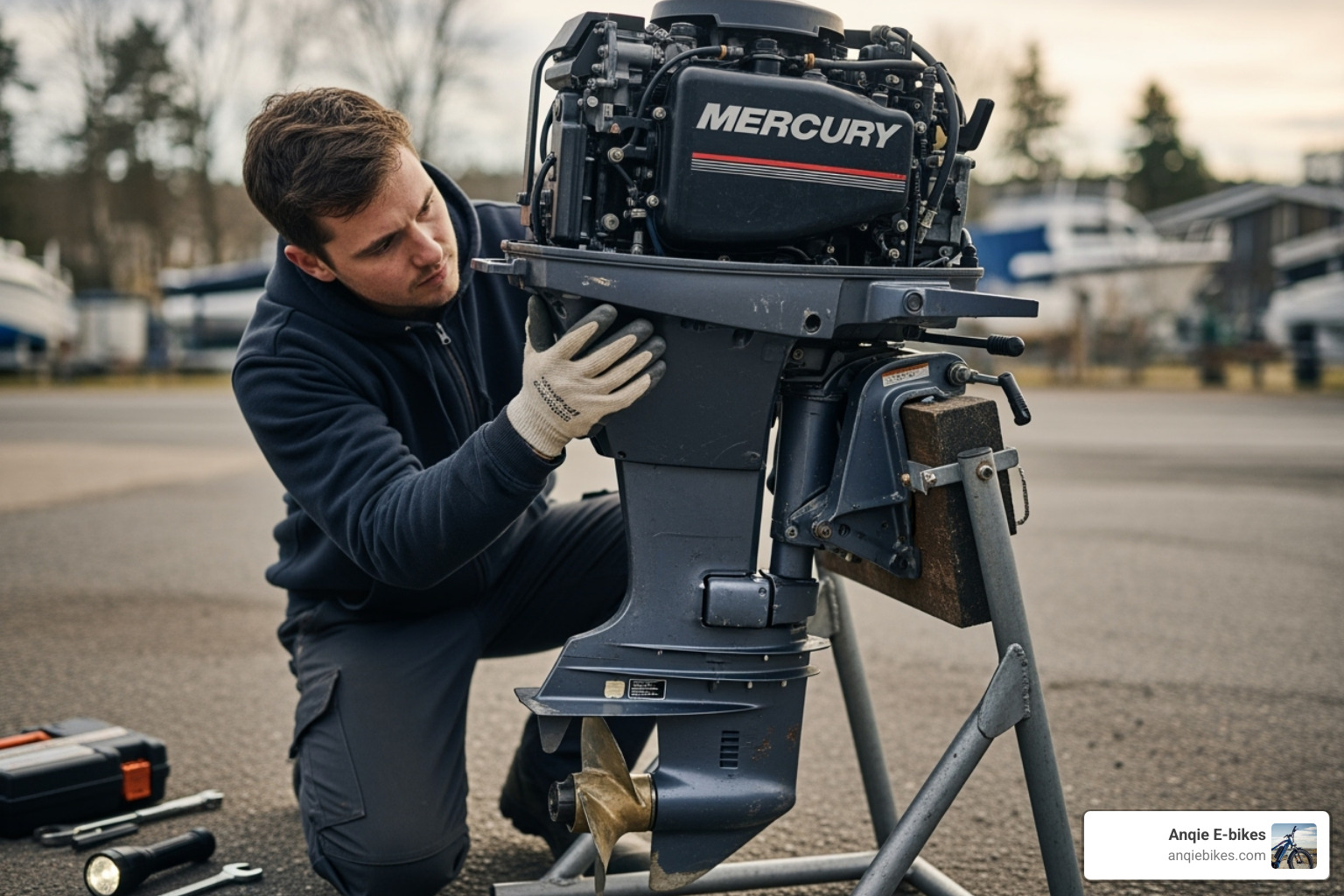
- Visual Inspection: Look for excessive corrosion, cracks in the cowling, and a bent or broken skeg (the fin below the propeller). Check the propeller for damage and ensure transom clamps are secure. Inspect fuel lines for cracks or leaks.
- Compression Test: This reveals the engine’s internal health. All cylinders should have readings within 10% of each other, typically between 110-145 psi. Low or uneven compression indicates serious internal problems.
- Lower Unit Oil Check: Drain a small amount of oil. It should be clean and amber. Milky oil means water has entered the gearcase, and metallic flakes indicate gear wear. Both are major red flags.
- Cold Start: The motor should start easily from cold. Listen for a smooth idle without sputtering or unusual noises like knocking or clunking. Check for a steady stream of water from the “tell-tale,” which indicates the cooling system is working.
- Service Records: A seller with detailed maintenance records provides proof that the motor was cared for. Records of impeller changes, gear oil services, and winterization are excellent signs.
Navigating the Market: Brands, Models, and Pricing
The market for used tiller outboards is vast, with options ranging from vintage workhorses to nearly-new motors at affordable prices.
Common Brands and Reliable Models
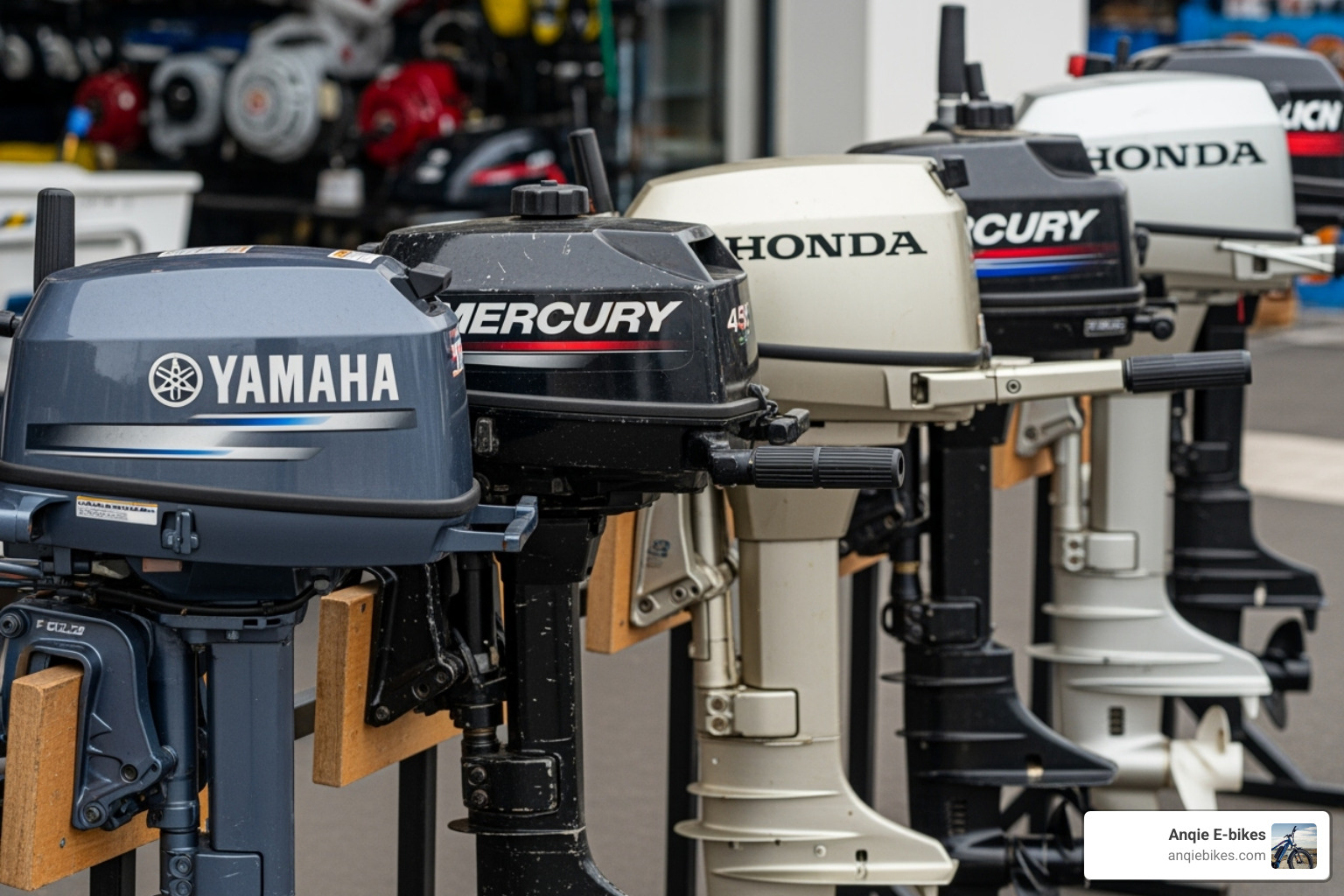
Certain brands have earned a reputation for reliability and are common on the used market.
- Mercury: A dominant force, known for its smooth FourStroke series and ProKicker models designed for precision trolling.
- Yamaha: Legendary for durability. The High Thrust series is excellent for heavy loads, while the Portable series is easy to transport.
- Honda: Known for quiet, fuel-efficient BF series 4-stroke motors, ideal for fishing and cruising.
- Evinrude and Johnson: These legacy brands produced countless robust 2-stroke outboards that are still in service today. Parts for older models may require some searching.
- Suzuki: Offers solid 4-stroke reliability, providing dependable service for budget-conscious boaters.
- Tohatsu and Nissan: These brands often share parts and deliver dependable performance, especially in the lower to mid-horsepower ranges.
Other brands like Coleman, Mariner, and Seapro can be budget-friendly options for those just starting out.
Typical Price Range for a Used Tiller Outboard
Prices for a used tiller outboard vary based on horsepower, age, and condition.
- Under 10 HP: Perfect for dinghies and as kicker motors, these typically cost $500 to $1,500 for a reliable unit.
- 15-40 HP: This is the most popular range for aluminum fishing boats. Expect to pay $1,500 to $4,000, depending on age, hours, and features like electronic fuel injection (EFI).
- 50-90 HP: For larger boats, these motors often feature electric start and power trim. Prices generally range from $3,500 to over $7,500.
Key factors influencing price include age, engine hours, overall condition, 2-stroke vs. 4-stroke technology, and brand reputation. A motor with documented low hours and recent service records will command a higher price but is often worth the premium.
Where to Find Your Perfect Motor
Once you know what you need in a used tiller outboard, the next step is to find it. There are several places to look, each with its own advantages.
Top Online Sources for a Used Tiller Outboard
Online marketplaces offer a vast selection you can browse from home.
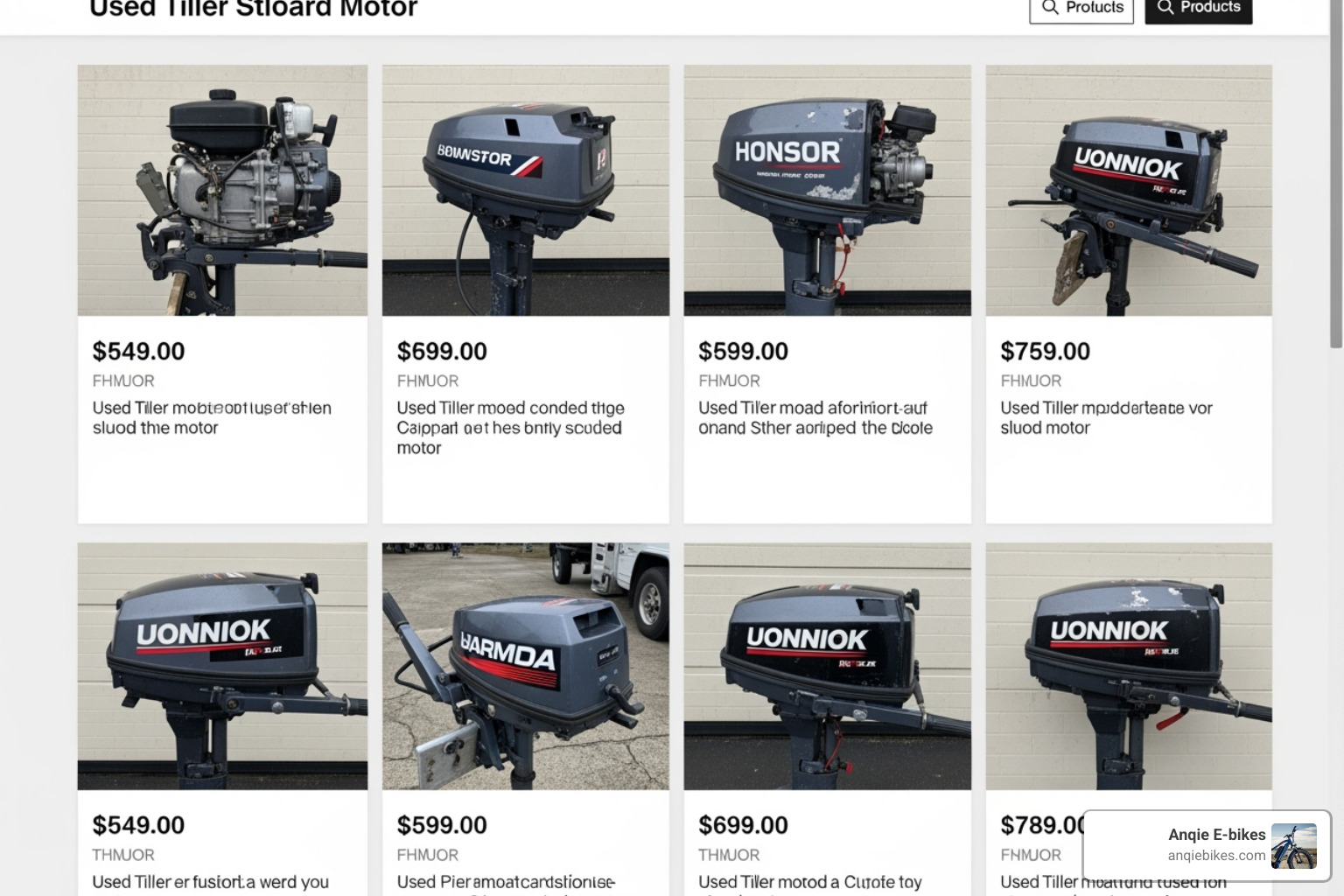
First, here at Anqie E-bikes, we offer a curated selection of pre-owned outboard motors, including many tiller outboard models. Our platform provides reliable choices with expert advice and customer support. You can explore our current inventory here: Used Outboard Motors | Anqie E-bikes.
eBay is another large marketplace with thousands of listings. It offers both auctions and “Buy It Now” options, and its Money Back Guarantee program can provide peace of mind when buying from private sellers.
For local deals, platforms like Kijiji, Craigslist, and Facebook Marketplace are useful for connecting with private sellers. While you can find great prices, these sites typically lack the buyer protection of dedicated stores, so a thorough in-person inspection is essential.
Reputable Dealers and Marinas
Buying from a dealer or marina often provides more security and professional service.
Anqie E-bikes is a trusted source for new and pre-owned outboard motors. We offer expert guidance, a wide product range, and solid after-sales support to provide dependable and affordable options for your boat.
Local marinas often take trade-ins and may service the motors they sell. Some even offer a limited warranty on used products, giving you a motor that has been professionally checked.
Specialized used motor dealers are another option. These businesses focus exclusively on used outboards, typically inspecting and servicing them before sale. They may offer warranties, which can be worth a slightly higher price for the added confidence.
Regardless of where you buy, always ask questions, request detailed photos, and try to see the motor run in person. If a seller is hesitant to provide information, it’s best to walk away.
Essential Maintenance for Your Tiller Outboard
Proper maintenance ensures your used tiller outboard remains reliable. Consistent care can add years to your motor’s life and doesn’t require advanced mechanical skills.
Routine Checks and After-Use Care
Simple habits after each trip are the best defense against long-term problems.
- Flush with Fresh Water: After every use, especially in salt or brackish water, flush the engine with fresh water using “flush muffs” and a garden hose. Run the motor for 10-15 minutes to clear salt and sediment from the cooling system.
- Inspect the Propeller: Check for dings, bends, or cracks. A damaged prop can cause vibrations that harm the lower unit.
- Check Fuel Lines: Squeeze the fuel lines to check for cracks or soft spots that could cause a dangerous leak.
- Wipe Down the Motor: A quick wipe-down with a damp cloth removes corrosive salt spray and grime.
- Check Oil and Fuel: On 4-stroke motors, check the engine oil level regularly. Ensure your fuel tank is free of water and debris.
Seasonal and Long-Term Maintenance
Perform these deeper maintenance tasks annually or as needed to prevent major issues.
- Winterization: If you live in a climate with freezing temperatures, this is essential. The process involves stabilizing the fuel, fogging the cylinders to prevent rust, and draining all water from the cooling system to prevent cracking.
- Change Gearcase Lube: Replace the gearcase (lower unit) oil annually or every 100 hours. Check the old oil for a milky appearance (water intrusion) or metallic flakes (gear wear).
- Replace Water Pump Impeller: This rubber part is critical for engine cooling and should be replaced every 1-3 years, depending on use. An overheating engine is often a sign of a failed impeller.
- Service Spark Plugs and Fuel Filters: Replace spark plugs and fuel filters annually or every 100 hours to ensure easy starts, smooth running, and a clean fuel supply.
A little preventative maintenance goes a long way. A well-cared-for used tiller outboard will provide reliable service for many seasons.
Frequently Asked Questions about Used Tiller Outboards
Here are clear, expert answers to some of the most common questions about used tiller outboards.
How many hours is considered high for a used outboard motor?
The definition of “high hours” depends on maintenance and age. A well-maintained outboard can last over 2,000 hours.
- Under 500 hours: Generally considered low use for a recreational motor. These often have a long life ahead.
- 500 to 1000 hours: A moderate range. These can be excellent buys if service records are available and a thorough inspection checks out.
- Over 1000 hours: Considered high. These motors require close scrutiny of compression, lower unit oil, and overall condition. A strong maintenance history is critical.
Condition and maintenance history are more important than hours alone.
Is a 2-stroke or 4-stroke better for a used tiller outboard?
Both have their merits; the best choice depends on your priorities.
4-Stroke Outboards:
- Pros: Quieter, more fuel-efficient, lower emissions, and smoother operation.
- Cons: Heavier and more mechanically complex.
2-Stroke Outboards:
- Pros: Lighter weight, simpler design, quicker acceleration, and often a lower purchase price.
- Cons: Louder, less fuel-efficient, and produce more emissions. Requires mixing oil with gas.
For small boats where weight is a concern, a 2-stroke can be ideal. For quiet operation and fuel economy, a 4-stroke is often the better choice.
What paperwork should I get when buying a used motor from a private seller?
Getting the right paperwork is crucial to prove ownership and avoid future issues. Always obtain the following:
- Bill of Sale: This is the most important document. It must include the names and addresses of the buyer and seller, the date, the purchase price, and a full description of the motor: make, model, year, horsepower, and especially the serial number. Ensure both parties sign it.
- Previous Registration or Title: In many states, outboards over a certain horsepower must be registered or titled. Ask the seller for this document and verify the name and serial number match the bill of sale and the motor itself. If a title is required and the seller doesn’t have it, this is a major red flag.
- Maintenance Records: While not legally required, any service receipts or manuals are valuable. They provide insight into the motor’s history and how well it was maintained.
Always check your local state or provincial requirements for transferring ownership of an outboard motor.
Conclusion
Finding the right used tiller outboard is the first step toward countless memories on the water. A well-chosen motor can open up a world of fishing trips, cruises, and aquatic adventures.
The key to a successful purchase is understanding your needs, doing diligent research, and performing a thorough inspection. Throughout this guide, we’ve covered why used tiller outboards are a great choice, highlighting their simplicity and cost-effectiveness. We’ve detailed what to look for, from horsepower and shaft length to the differences between 2-stroke and 4-stroke engines. Our inspection checklist and maintenance tips are designed to help you find and care for a reliable motor.
Whether you search online marketplaces or prefer the security of a reputable dealer like us at Anqie E-bikes, the right motor is out there. The freedom of the open water is within reach.
Ready to start your adventure? We’d love to help you get on the water. Explore our selection of pre-owned outboard motors today.