
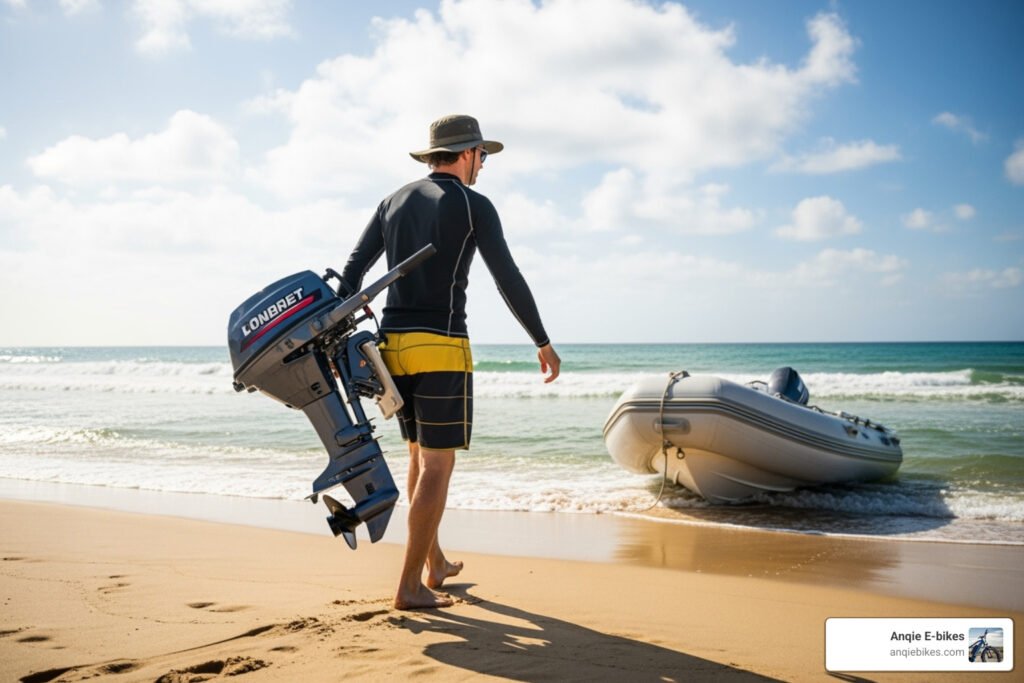
Why Finding the Lightest 2-Stroke Outboard Motor Matters for Small Boat Owners
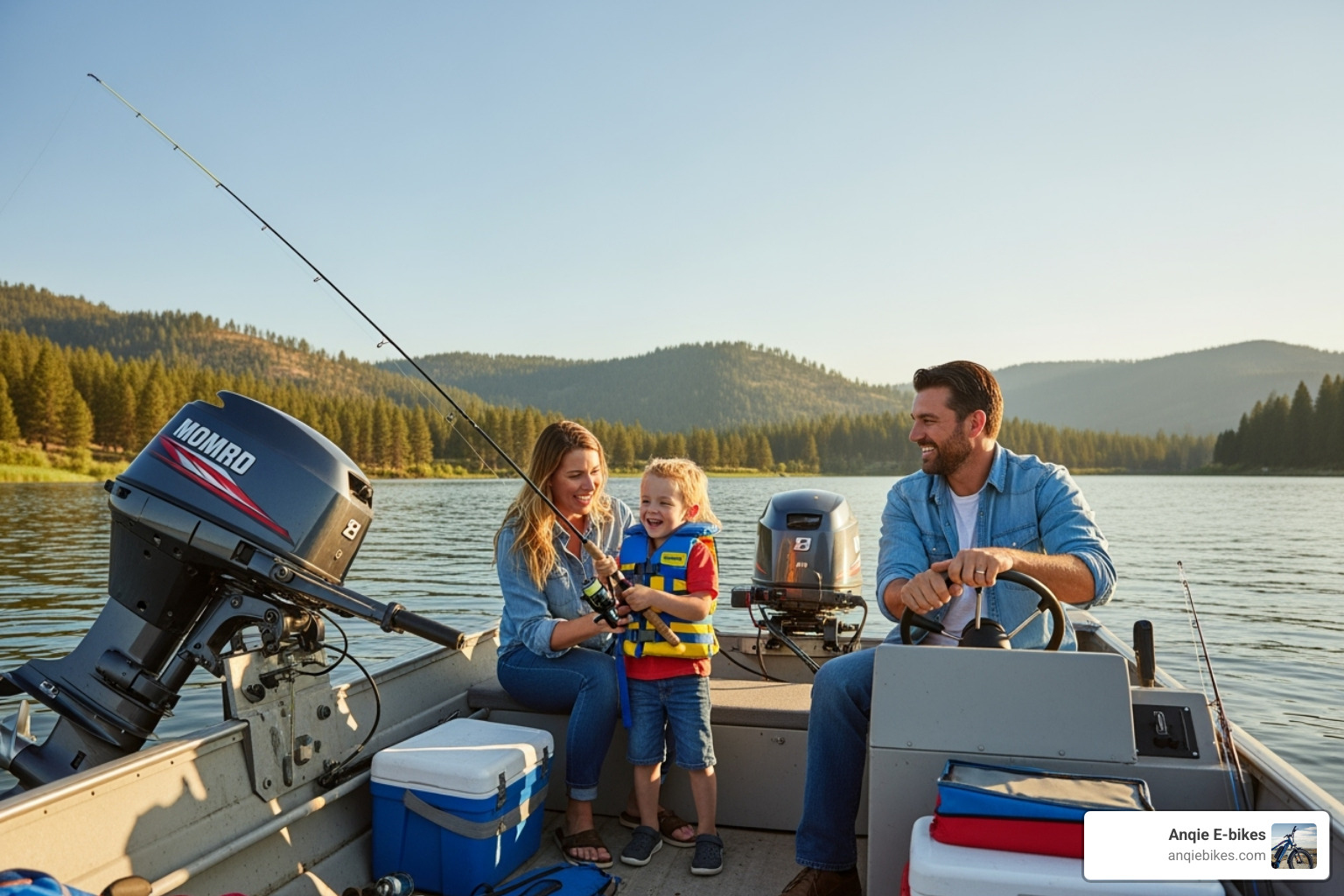
The lightest 2 stroke outboard motor can transform your experience with a tender, inflatable, or small fishing rig. If you’ve struggled with a heavy motor, you know why weight matters. Here are the top contenders:
| Model | Weight | Horsepower | Best For |
|---|---|---|---|
| Yamaha 2HP (2D) | 9.8-10 kg (22 lbs) | 2 HP | Ultimate portability |
| Mercury 2.2M | 12 kg (26.5 lbs) | 2.2 HP | Direct drive simplicity |
| Mercury/Mariner 3.3 | 13 kg (28.7 lbs) | 3.3 HP | Forward-Neutral gears |
| Yamaha/Mariner 4/5 HP | 17 kg (37.5 lbs) | 4-5 HP | Best power-to-weight with full gears |
| Tohatsu M8B / Mercury 9.9 | 26 kg (57 lbs) | 8-9.9 HP | Mid-range portables |
A few pounds make a huge difference when you’re handling a motor multiple times per outing.
2-stroke engines dominate the lightweight category due to their simple design, which lacks the heavy valve trains and complex lubrication systems of 4-strokes. This results in fewer parts, less weight, and easier maintenance. Firing once per revolution (compared to every two for a 4-stroke), they deliver impressive power from a compact package.
The trade-offs include requiring pre-mixed fuel, producing more emissions, and delivering peak power at higher RPMs. However, for applications where portability is paramount—tenders, car-top boats, and backup power—these compromises are often worthwhile.
I’m mArk saToshi, and at Anqi E-Bikes, I’ve helped countless boaters find the perfect lightest 2 stroke outboard motor for their needs, from featherweight 2HP models to robust 9.9HP options for weekend fishing trips.
Why Choose a Lightweight 2-Stroke Outboard?
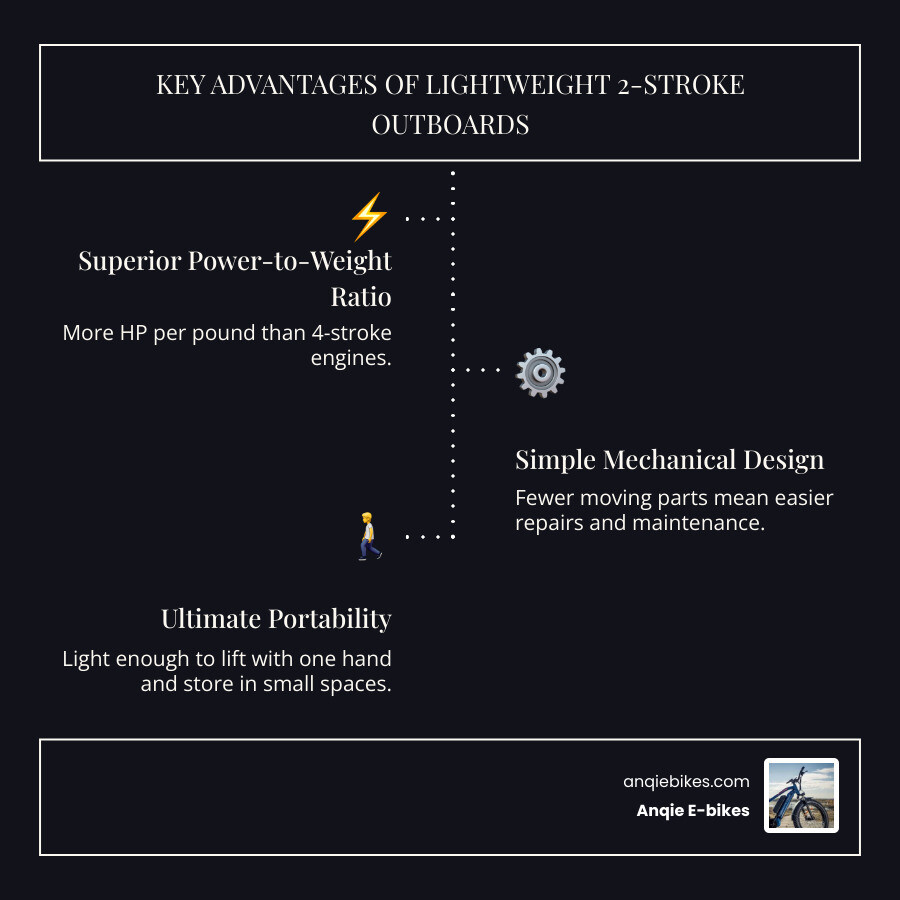
The primary advantage of a lightweight 2-stroke is its exceptional power-to-weight ratio. By firing on every revolution, a 2-stroke engine produces more power from a smaller, lighter package than a comparable 4-stroke.
This is possible due to their mechanical simplicity. Lacking complex valve trains or separate oil systems, a 2-stroke can be 30-40% lighter. This simple design also translates to easy maintenance. With accessible spark plugs and simple carburetors, most repairs require only basic tools.
Another key benefit is acceleration. Two-strokes provide an instant burst of power when you twist the throttle, which is ideal for getting a dinghy on plane or maneuvering in tight spaces.
This combination of portability and power makes them highly versatile. They are a perfect match for:
- Tenders and Inflatables: Where easy handling for frequent launching is key.
- Car Toppers & Small Fishing Rigs: Providing reliable power without the bulk.
- Kayaks: Turning a paddle-powered craft into an efficient fishing platform.
- Auxiliary Power: Serving as a compact, reliable backup for sailboats.
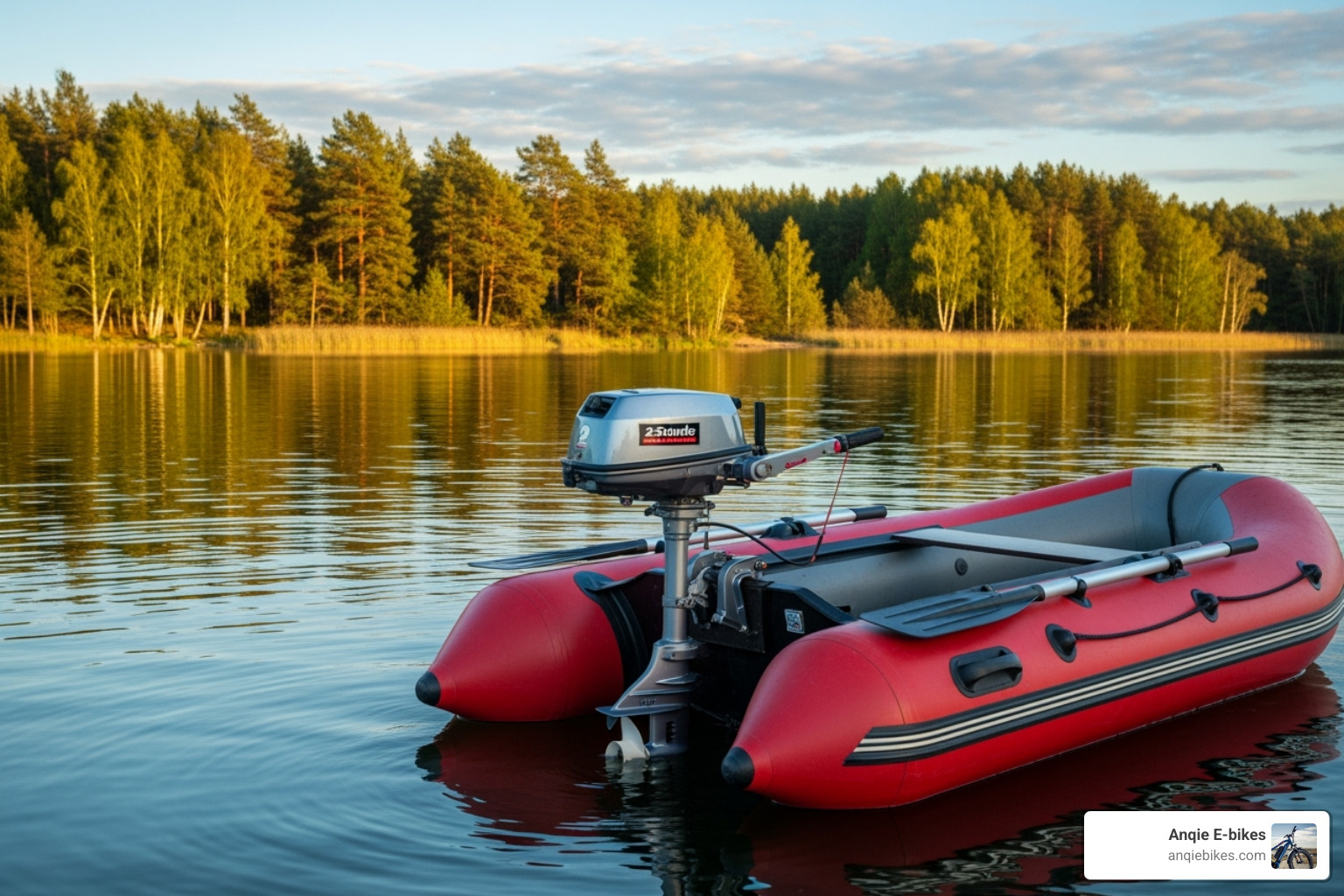
The bottom line? Choosing a lightweight 2-stroke means prioritizing portability, simplicity, and proven technology for a more enjoyable, less strenuous boating experience.
The Contenders: A Comparison of the Lightest 2-Stroke Outboard Motors
Let’s get down to brass tacks. When shopping for the lightest 2 stroke outboard motor, you’ll see names like Yamaha, Mercury, Tohatsu, and Mariner. In the small outboard world, “brand cloning” is common, meaning a Mercury 3.3hp and a Tohatsu 3.5hp might be the same engine with different branding. This is a benefit, as it increases options for parts and service.
For historical context on the industry’s long-standing pursuit of lightweight power, there’s a fascinating discussion on Lightest 30 hp and 40 hp 2 strokes ever made.
Here’s how the top contenders stack up:
| Model (Example) | Horsepower | Weight (kg/lbs) | Displacement (cc) | Key Feature |
|---|---|---|---|---|
| Yamaha 2HP (2D/2CMHS) | 2 HP | 9.8-10 kg (22 lbs) | 50 cc | Ultimate lightest, loop charging |
| Mercury 2.2M | 2.2 HP | 12 kg (26.5 lbs) | Not specified | Direct drive, 360-degree steering |
| Mercury/Mariner/Tohatsu 3.3/3.5 HP | 3.3 – 3.5 HP | 13 kg (28.7 lbs) | ~75 cc | F-N gearshift option, widely cloned |
| Yamaha/Mariner 4/5 HP | 4 – 5 HP | 17 kg (37.5 lbs) | ~103-123 cc | Single cylinder, F-N-R gears |
| Tohatsu M8B | 8 HP | 26 kg (57 lbs) | 169 cc | Strong mid-range power-to-weight |
| Mercury 9.9hp TwoStroke | 9.9 HP | 26 kg (57 lbs) | 169 cc | Lightest in class, optional electric start |
| Parsun T8 | 5.8 HP (T8) | 26-27 kg (57-60 lbs) | 169 cc | Portable, durable, easy operation |
The Featherweight Champions: Under 3 HP
For absolute portability, these tiny motors are best.
The undisputed champion is the Yamaha 2HP (2D/2CMHS), weighing a mere 9.8 kg (22 lbs). Its 50cc engine features loop charging and a cleaner 100:1 oil ratio for less smoke and carbon buildup. With fold-away carry handles, it’s the pinnacle of portability. Details are available from Yamaha Motor New Zealand.
A close second is the Mercury 2.2M Short Shaft at 12 kg (26.5 lbs). This 2.2 HP motor uses a simple direct drive system with 360-degree steering for reverse, eliminating a gearbox. Its integrated fuel tank makes it a true grab-and-go solution.
The All-Rounders: 3 HP to 5 HP
This range offers a great balance of manageable weight and practical power.
The Mercury/Mariner/Tohatsu 3.3/3.5hp family weighs just 13 kg (28.7 lbs) and offers excellent value. These widely cloned engines often feature an optional forward-neutral (F-N) gearshift, a major convenience for docking. The Yamaha 3.5hp ‘Malta’ is another solid choice in this class.
For more thrust, the Yamaha/Mariner 4/5hp single cylinder models weigh around 17 kg (37.5 lbs). They typically include a twist grip throttle and full forward-neutral-reverse (F-N-R) gears, eliminating the need to spin the motor for reverse. They offer one of the best power-to-weight ratios in their class. Mercury’s experience with 2-stroke technology is evident across their product line, including historical models like the 1997 Mercury 40 HP 2-Stroke.
Finding the lightest 2 stroke outboard motor in the 8-10 HP Range
For larger tenders or small fishing boats, this range provides serious power while remaining portable.
The Tohatsu M8B 8hp is a standout at just 26 kg (57 lbs). Its 169cc engine uses loop charged induction for smooth operation, and its high-grade marine aluminum alloy construction ensures corrosion protection.
The Mercury 9.9hp TwoStroke matches the 26 kg (57 lbs) weight while delivering nearly 10 HP, making it one of the lightest in its class. It shares the 169cc engine with loop charge combustion and features a through-prop exhaust to reduce noise. An optional electric start adds convenience.
The Parsun T8 Outboard Motor is another option at 26-27 kg, offering 5.8HP from its 169cc engine in a durable, portable package.
These models prove you can have both power and portability. Mercury’s engineering expertise extends to larger engines as well, as seen in models like the 2002 Mercury 90 HP 2-Stroke.
Key Considerations When Choosing Your Motor
Picking the right lightest 2 stroke outboard motor involves more than just grabbing the one with the lowest weight on the spec sheet. Here are the key factors to balance.
Power Output vs. Weight: This is the core trade-off. A 9.8 kg Yamaha 2HP is easy to carry but might struggle with a loaded boat in a current. A 26 kg Mercury 9.9hp offers ample power but is harder to transport. Be realistic about your boat, typical load, and conditions.
Durability: Marine environments are harsh. Look for motors with corrosion-resistant materials like Yamaha’s YDC-30 aluminum alloy or Tohatsu’s zinc-coated internal water passages. Stainless steel components are also a sign of quality construction.
Noise Levels: While 2-strokes are inherently louder than 4-strokes, some models are quieter. Features like through-prop exhaust, found on the Mercury 9.9hp and Tohatsu M8B, significantly reduce engine noise for a more pleasant experience.
Emissions Regulations: Traditional carbureted 2-strokes have been phased out for new sale in some regions like the USA due to EPA/CARB standards. Modern direct-injected (DFI) 2-strokes like the 2011 Evinrude Etec 200 HP DFI 2-Stroke meet these standards. Always check local regulations, as the used market for carbureted models remains strong and legal to operate in most places.
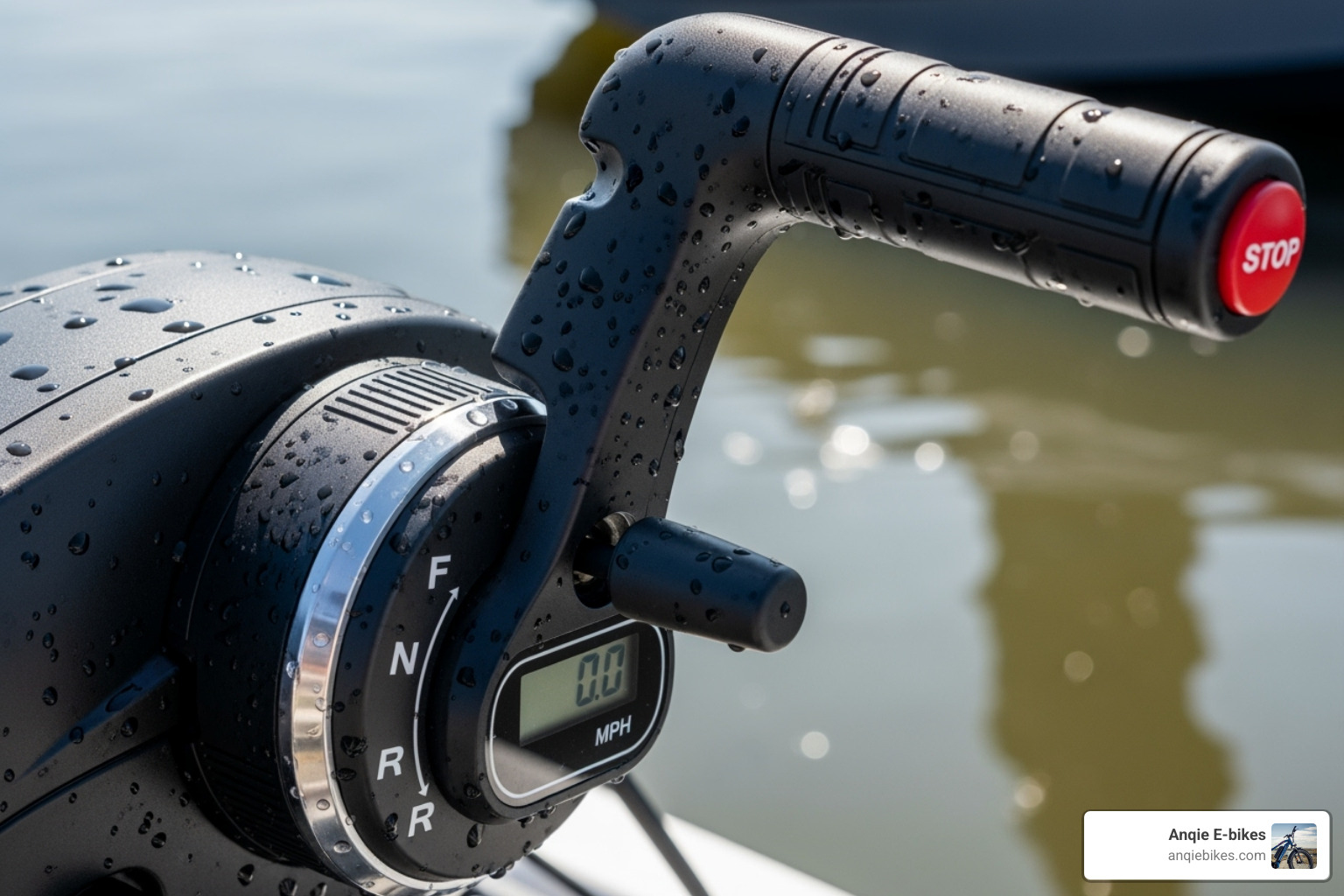
Gears vs. 360-Degree Steering: The smallest motors use direct drive, requiring you to rotate the engine 180 degrees for reverse. This is simple but can be awkward. Models with a forward-neutral-reverse (F-N-R) gearshift offer far superior maneuverability, especially around docks.
Fuel Tanks: Most lightweights have a small integrated tank for portability. For longer trips, look for models (typically 3.5HP and up) that also have a connection for an external fuel tank.
Maintenance for your lightweight 2 stroke outboard motor
The simple structure of a 2-stroke makes maintenance straightforward.
- Premixed Fuel: You must mix 2-stroke oil with gasoline, typically at a 50:1 or 100:1 ratio. Always follow the manufacturer’s specification to ensure proper lubrication.
- Spark Plug: Regularly inspect and clean or replace the single, easily accessible spark plug.
- Carburetor Cleaning: Prevent fuel varnish by running the carburetor dry after each use or using a fuel stabilizer. This avoids most common running issues.
- Winterization: At the end of the season, stabilize the fuel, fog the cylinders, check gear oil, and store the motor in a dry place.
- Corrosion Protection: Regularly check and replace sacrificial zinc anodes. A freshwater flush after saltwater use is crucial to remove corrosive salt deposits. These principles apply to all 2-strokes, including larger models like the 1986 Yamaha 115 HP 2-Stroke.
What is the typical price range for these motors?
Understanding the price helps you budget and spot a good deal.
- 2.0 to 2.5 HP Range: New models typically range from $525 to $690 in the U.S., though prices vary significantly by region.
- 3.3 to 3.5 HP Group: Expect to pay between $600 and $765 for new motors.
- 8 to 10 HP Range: New prices start at $1,500 and up, with optional features like electric start adding to the cost.
The used market is a great option, as pre-owned motors can cost 40-60% less than new. However, factor in potential maintenance costs. Dealer pricing also varies, so it pays to shop around. At Anqie E-bikes, we help customers find the right new or pre-owned motor at a fair price, providing expert guidance on what you’re getting for your money.
Don’t forget to budget for accessories like an external fuel tank, 2-stroke oil, and basic tools.
Frequently Asked Questions about Lightweight 2-Strokes
Here are answers to the most common questions about the lightest 2 stroke outboard motor.
What is the absolute lightest 2-stroke outboard motor available?
The Yamaha 2HP (models 2D or 2CMHS) is the lightest commercially available 2-stroke outboard, weighing just 9.8 kg (22 lbs). Its minimalist design makes it the champion of portability for today’s market. While vintage collectors might seek out even lighter historical models like the 12-pound Cruise ‘N Carry, the Yamaha 2HP is the lightest practical choice you can buy.
Are new 2-stroke outboards banned in the USA?
This is a common point of confusion. New sales of traditional carbureted 2-stroke outboards are largely phased out in the USA due to EPA and CARB emissions standards. However, this does not apply to all 2-strokes. Modern Direct Fuel Injected (DFI) 2-stroke outboards use advanced technology to meet or exceed emissions standards, and they remain available for sale.
For the lightweight carbureted 2-strokes discussed in this article, the used market in the USA is the primary source. They remain legal to own and operate in most areas, but it’s always wise to check your local waterway regulations before buying.
How do lightweight 2-strokes compare to 4-strokes or electric outboards?
Each motor type has distinct advantages, and the best choice depends on your priorities.
- Lightweight 2-Strokes:
- Pros: Unbeatable power-to-weight ratio, simple mechanics, easy maintenance, strong acceleration, lower purchase price (especially used).
- Cons: Require pre-mixed fuel, louder, higher emissions.
- 4-Strokes:
- Pros: Quieter operation, cleaner emissions, more fuel-efficient, no fuel mixing.
- Cons: Significantly heavier and bulkier, more complex mechanically.
- Electric Outboards:
- Pros: Whisper-quiet, zero emissions, instant torque, minimal mechanical maintenance.
- Cons: Limited range and runtime, heavy batteries, high initial cost.
For a detailed look at how different motor types compare by weight, you can review resources like Outboard Motor Weight: Comparison by HP/Brand & Lightest Options.
If maximum portability, simplicity, and responsive power are your top needs, a lightest 2 stroke outboard motor is an excellent choice.
Conclusion: Making the Right Choice for Your Needs
We’ve explored the best lightweight 2-stroke outboards, from the 9.8 kg Yamaha 2HP to the powerful 26 kg models in the 8-10 HP range. There is a lightest 2 stroke outboard motor to fit every boater’s needs.
The right choice depends on your priorities. For ultimate portability, the Yamaha 2HP is the clear winner. If you want a balance of power and features like a gearshift, the Mercury 3.3hp family is an excellent all-rounder. For larger boats needing more thrust, the Tohatsu M8B or Mercury 9.9hp deliver impressive performance without excessive weight.
Consider what matters most: ease of transport, simple maintenance, or the convenience of a full gearshift? Your answers will guide you to the perfect motor.
At Anqie E-bikes, we’re here to help you steer these choices. Serving Brooklyn, NY, and all of New York USA, our team offers real-world experience to get you on the water. We stock new and pre-owned outboard motors to fit any budget and provide expert after-sales support.
Don’t hesitate to reach out with your questions. We love helping boaters find the right motor to make their adventures easier and more enjoyable.
Ready to find your perfect match? Explore our full range of new and used outboard motors today!