
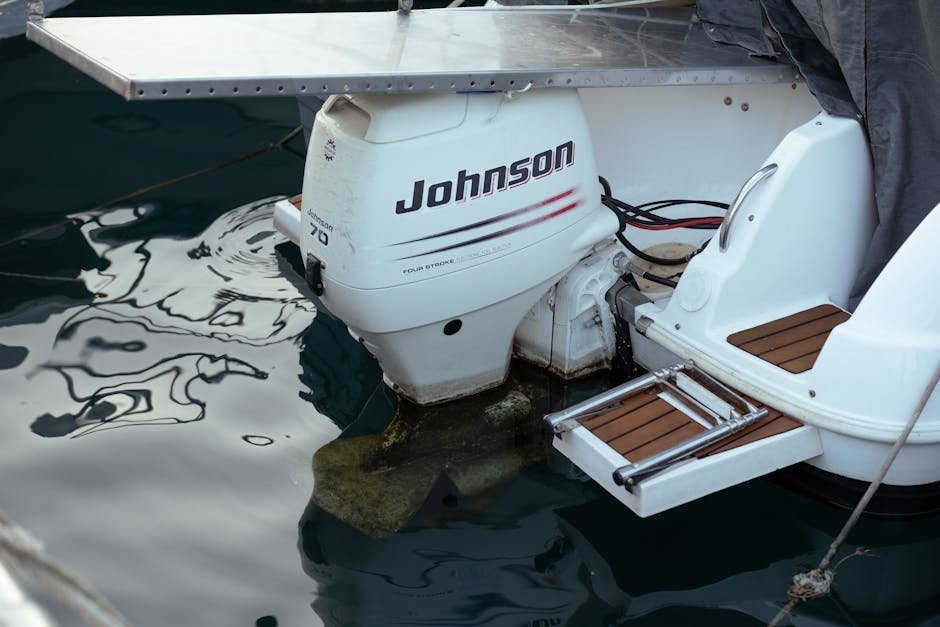
Why Used Fishing Boat Motors for Sale Are Your Best Path to the Water
Used fishing boat motors for sale represent one of the smartest investments for anglers looking to get on the water without breaking the bank. Whether you’re powering a bass boat, a simple jon boat, or a small dinghy, the right pre-owned outboard motor can save you thousands while delivering reliable performance.
Quick Answer: Where to Find Used Fishing Boat Motors
- Online Marketplaces: Marine classifieds and local online marketplaces
- Marine Dealerships: Local authorized and specialized dealers
- Popular Brands: Yamaha, Mercury, Suzuki, Honda, Evinrude, and Tohatsu
- Price Ranges: $1,500-$5,000 (small HP), $5,000-$15,000 (mid-range), $15,000+ (high HP)
- Key Factors: Horsepower, shaft length, hours of use, 2-stroke vs. 4-stroke, and maintenance history
The used outboard motor market is substantial, with listings ranging from small 2hp engines to powerful 250hp units. The key is matching the right motor to your boat and fishing style while avoiding common pitfalls. Finding a reliable used motor isn’t just about price—it’s about understanding what to look for, where to shop, and how to inspect a motor before you buy.
This guide walks you through everything you need to know: matching horsepower to your boat, understanding 2-stroke vs. 4-stroke engines, inspecting motors for red flags, and knowing what prices to expect. You’ll learn which brands offer the best reliability and how to maximize your motor’s lifespan. I’m Mark from Anqie E-bikes, and I’ve helped countless boaters steer the used fishing boat motors for sale market with confidence. Our team specializes in matching customers with reliable pre-owned outboard motors that fit their specific needs, backed by expert guidance and support.
The Smart Choice: Why a Used Motor Makes Sense (and When It Doesn’t)
Buying an outboard motor is a significant investment. When deciding between new and pre-owned, it’s important to understand the trade-offs.
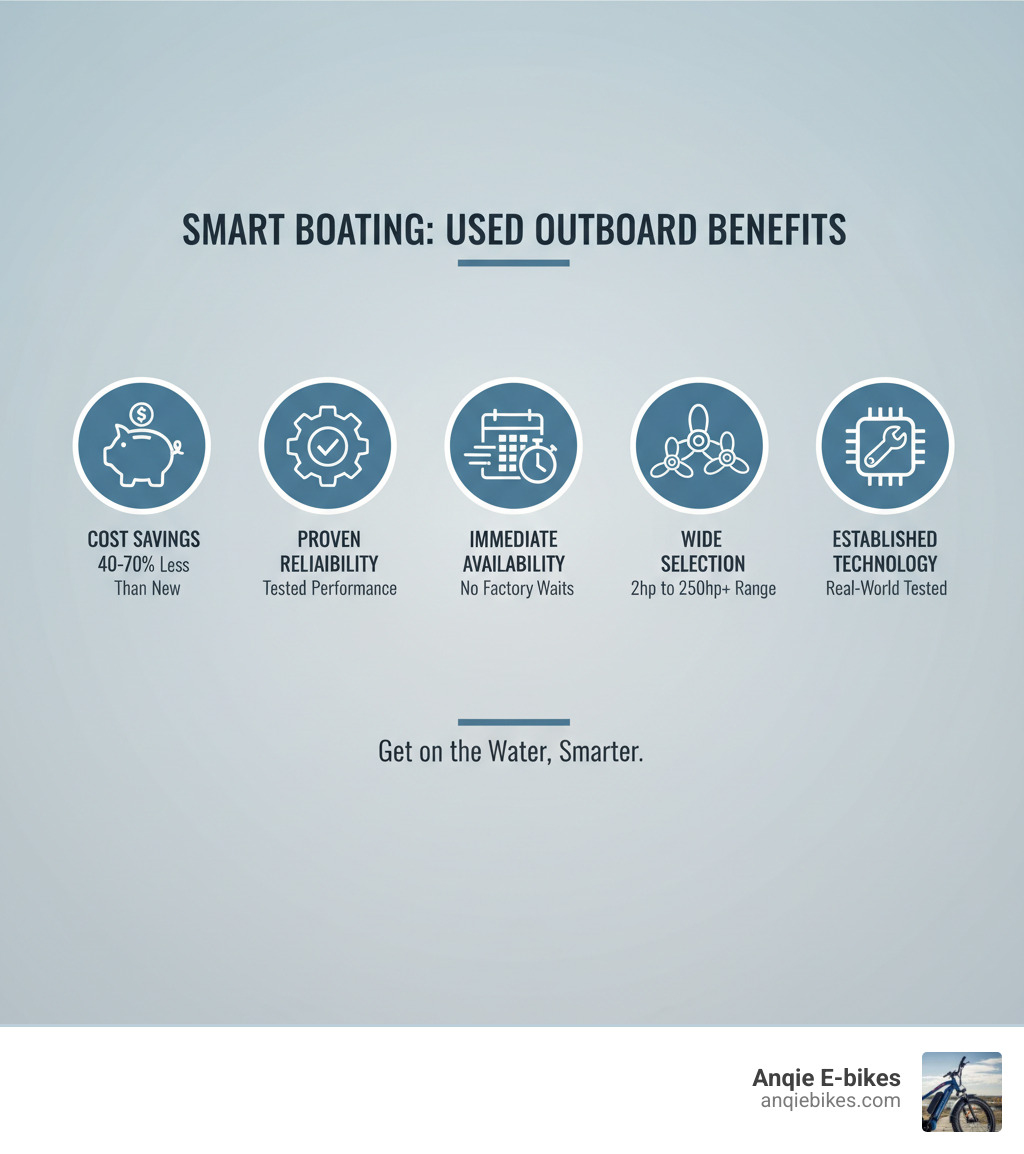
For most boaters, used fishing boat motors for sale offer a compelling value. The money you save can be substantial—often 40-70% less than the retail price for a motor with plenty of life left. That’s savings you can put toward a quality fish finder, premium rods, or more time on the water. Beyond the sticker price, you’re getting proven technology. These motors have logged hours on the water, their quirks are known, and their reliability is established. You’re not testing first-year production issues.
Another benefit is immediate availability. Online marketplaces and dealerships have a constant stream of options ready to go. There are no factory delays or waiting lists. When you find the right motor, you can often be on the water the same weekend.
However, a smart buyer knows the risks. The biggest drawback is the warranty situation. Most used motors, especially from private sellers, are sold “as-is.” If it breaks, you’re footing the repair bill. Some dealerships offer limited warranties, but they are much shorter than what you’d get with a new motor.
There’s also the possibility of hidden issues. A motor might look great but harbor problems that a quick test run won’t reveal, like internal corrosion from improper flushing or gummed-up fuel systems from long-term storage. Older technology is another factor. A 15-year-old motor likely has a carburetor instead of modern fuel injection and may lack the fuel efficiency of current models. For some, this simplicity is a plus, as carbureted engines are often easier for DIY repairs. For others, it’s a compromise.
So, who should buy used? If you’re mechanically inclined, willing to do a thorough pre-purchase inspection, and working with a realistic budget, a used motor is an incredibly smart choice. If you prefer the peace of mind of a full warranty and don’t mind paying a premium, new might be your better path.
The table below breaks down the key differences:
| Feature | New Outboard Motors | Used Outboard Motors |
|---|---|---|
| Cost | Highest initial investment | Significant cost savings (often 40-70% less) |
| Warranty | Full manufacturer’s warranty | Limited or no warranty (dealer might offer some) |
| Reliability | Brand new, unproven track record | Proven reliability, performance established |
| Technology | Latest advancements, fuel injection, digital controls | Older technology, carbureted, simpler mechanics |
| Maintenance | Potentially complex, specialized tools | Often simpler, easier for DIY repairs |
| Availability | Subject to factory production & shipping | Immediately available, wide selection |
At Anqie E-bikes, we help customers work through this decision. With proper research and a careful inspection, a quality used motor can deliver years of reliable service at a fraction of the cost of new.
Your Ultimate Guide to Finding Used Fishing Boat Motors for Sale
Finding the perfect used fishing boat motor for sale means matching the right engine to your boat, fishing style, and budget. Let’s walk through the key decisions to help you make a smart purchase.
Matching the Motor to Your Boat and Fishing Style
Your boat has a maximum horsepower rating stamped on a transom plate—this is a safety limit you should never exceed. Too much power can make a boat unstable, while too little will leave you underpowered.
- Small boats (jon boats, dinghies, inflatables) typically use motors in the 5hp to 15hp range. These are lightweight and provide plenty of push for calm waters.
- Larger vessels (bass boats, center consoles) need more muscle, from 25hp up to 250hp or more. A 17-foot bass boat might use a 90hp motor, while a 24-foot offshore boat could need twin 150hp engines.
Your fishing style also matters. Trolling requires good low-speed control, while covering long distances fast demands higher horsepower and fuel efficiency. Also, consider if the motor was used in saltwater versus freshwater. Saltwater is highly corrosive, so a freshwater motor often has less wear. Finally, ensure the shaft length (15″, 20″, 25″, or 30″) matches your boat’s transom height for proper propeller depth and performance. For boaters who need extra power and redundancy, consider checking out our selection of Twin Outboards.
2-Stroke vs. 4-Stroke: What’s the Difference?
This is a classic debate among boaters, with real advantages to each type.
2-stroke motors are an older technology known for being lighter and having simpler mechanics, which can make certain repairs easier. They also offer snappier acceleration. The downsides include being noisier, less fuel-efficient, and producing more emissions. Our 2-stroke Outboard Motor Guide covers them in more detail.
4-stroke motors are the modern standard. They are significantly quieter and more fuel-efficient. They run on straight gasoline and produce fewer emissions. The main trade-off is weight; they are heavier than comparable 2-strokes, which can affect performance on smaller boats. They are also more mechanically complex, which can lead to more expensive repairs.
For ultimate stealth, many anglers supplement their gas outboard with an electric trolling motor for silent positioning while fishing.
Top Brands and Where to Find a used fishing boat motor for sale
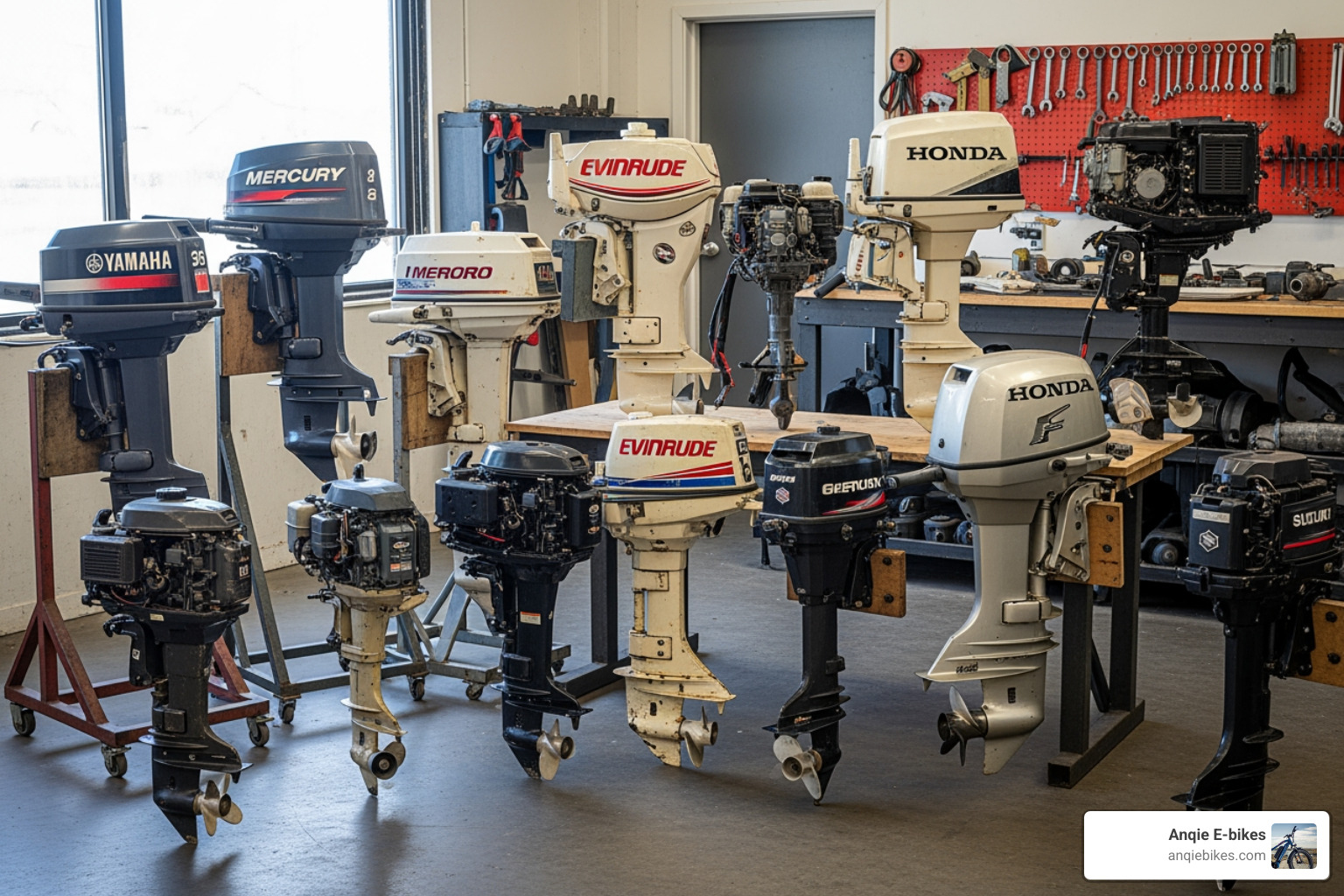
When shopping for used fishing boat motors for sale, certain brands have earned a reputation for reliability. Yamaha, Mercury, Suzuki, Honda, Evinrude, and Tohatsu consistently top the list due to their performance, widespread dealer networks, and available parts.
To find a motor, look to online marketplaces and local classifieds, which let you filter by location, brand, and price. This is great for finding motors nearby, saving on shipping, and allowing for an in-person inspection.
Specialized marine dealers are another excellent option. They typically inspect their used inventory and may offer limited warranties. While you might pay a bit more than a private sale, you gain professional evaluation and a safety net. Dealers can also provide expert advice on matching a motor to your boat.
Don’t overlook local marine mechanics and repair shops. They often know of motors for sale from their customers and can be hired for pre-purchase inspections.
Decoding the Price: What to Expect
Pricing for used motors depends on several factors: brand reputation, age, hours of use, and overall condition. A well-maintained older motor from a top brand can be a better buy than a neglected newer one.
Horsepower is the biggest price driver. Here are some general ranges:
- Small motors (under 15hp): Perfect for dinghies and jon boats, prices range from around $500 for older models to $3,000-$5,000 for newer 4-strokes. Our Cheap Outboard Engines selection offers great entry-level options.
- Mid-range motors (25hp to 90hp): The sweet spot for many fishing boats. Prices can range from $2,500 for older 2-strokes to $7,000-$15,000 for recent, low-hour 4-stroke models.
- High-horsepower motors (over 100hp): For larger boats, prices start around $8,000 and can exceed $25,000 for recent, low-hour engines from top brands. These are serious investments where a thorough inspection is critical.
Listings with “OBO” (Or Best Offer) indicate the seller is open to negotiation. Don’t hesitate to make a reasonable offer, especially if your inspection reveals minor issues.
The Buyer’s Checklist: Inspecting and Maintaining Your Used Motor
You’ve found a promising used fishing boat motor for sale. Before you buy, a thorough inspection is crucial to protect your investment and ensure you don’t get stranded on the water.

Pre-Purchase Inspection: What to Look For
If you’re not mechanically inclined, hiring a marine mechanic for an inspection is money well spent. Here’s what to check:
- Visual Inspection: Look for corrosion (white, powdery buildup), especially on a saltwater motor. Check the cowling for cracks, not just cosmetic scratches. Inspect the propeller for dings and the skeg (the fin below it) for damage.
- Mechanical Checks: A compression test is essential. Readings should be consistent across all cylinders (within 10-15% of each other). Check the spark plugs for oil or fouling. Drain a sample of the lower unit oil; if it’s milky, water is getting in (a major red flag). Metallic flakes indicate worn gears.
- Test Run: Insist on seeing the motor run, even on flush muffs. Listen for knocking or grinding noises. Ensure a steady stream of water is exiting the tell-tale, indicating the water pump is working.
- History: Ask for hours of use and any available service history. Records of annual service or recent repairs are a huge plus.
Red Flags to Avoid When Buying a used fishing boat motor
Walk away if you see these warning signs:
- A fresh coat of paint on an old motor, which could be hiding corrosion or damage.
- A seller who is unwilling to run the motor for you.
- Mismatched parts or signs of amateur repairs.
- Milky gear oil, indicating water intrusion and costly repairs.
- Excessive vibration or strange noises during operation.
- Signs of heavy commercial use, which ages a motor much faster than recreational use.
Maximizing Lifespan: Essential Maintenance Tips
Once you’ve bought your motor, consistent maintenance is key to its longevity.
- Flush the engine with fresh water after every single use, especially in saltwater.
- Change engine oil and filters on a 4-stroke according to the manufacturer’s schedule.
- Change the lower unit gear oil regularly and check for water or metal particles.
- Use fresh, ethanol-free fuel when possible and replace fuel filters regularly.
- Replace spark plugs as needed for better performance and efficiency.
- Inspect and replace the water pump impeller every few years as preventive maintenance.
- Properly winterize the motor if you live in a cold climate to prevent freezing damage. This includes stabilizing the fuel, fogging the engine, and draining all water.
- Store the motor in a dry, protected space, preferably on a stand if removed from the boat.
At Anqie E-bikes, we provide guidance on maintenance because we want you on the water season after season. A well-maintained used motor can deliver thousands of hours of reliable service.
Frequently Asked Questions about Used Boat Motors
We talk with customers every day who are searching for used fishing boat motors for sale. Here are answers to some of the most common questions.
What’s the average lifespan of a used outboard motor?
There’s no single answer, as lifespan depends heavily on care. However, a well-maintained 4-stroke outboard can typically deliver 1,500 to 3,000 hours of service, with some lasting much longer. Maintenance is king. A motor that’s been flushed regularly, had its oil changed on schedule, and been properly winterized will far outlast a neglected one. Operating conditions also matter; a motor used exclusively in freshwater will age better than one used in saltwater. Brands like Yamaha, Mercury, Honda, and Suzuki have earned reputations for building durable motors that last.
Is it better to buy from a dealer or a private seller?
This comes down to peace of mind versus potential savings.
Dealers typically inspect and service their used inventory and may offer a limited warranty. You get a clear title and professional support, which provides security. The trade-off is a higher price, often 20-30% more than a private sale.
Private sellers on online classifieds can offer better prices, and you can get a account of the motor’s history. However, sales are almost always “as-is,” with no warranty. You are fully responsible for inspecting the motor and verifying its condition. If you’re not mechanically confident, hiring a mechanic for an inspection is highly recommended.
For those who want security, a dealer is often worth the extra cost. If you’re confident in your inspection abilities, a private sale can offer incredible value.
How many hours is “too many” for a used outboard?
The right question isn’t about the number of hours, but the quality of those hours. A well-maintained motor with 1,000 hours is a better buy than a neglected motor with 300. Maintenance history and a compression test are more important than the hour meter alone.
That said, here are some general benchmarks for a 4-stroke motor’s lifecycle:
- Under 500 hours: Considered low-hour and commands a premium price.
- 500-1,000 hours: Mid-range, with plenty of life left if cared for.
- 1,000-2,000 hours: Higher-hour territory where maintenance history is critical.
- Over 2,000 hours: A high-hour motor that may be nearing the end of its economic life.
Always prioritize a motor with documented service history and strong, consistent compression readings over one with mysteriously low hours and no records.
At Anqie E-bikes, we help customers steer these questions, matching them with used fishing boat motors for sale that fit their needs and budget. Our team knows what to look for and can help you make a smart purchase.
Conclusion: Powering Your Next Adventure with Confidence

You are now equipped to find and purchase used fishing boat motors for sale that will serve you well for years. By focusing on the key takeaways, you can make a smart decision that gets you on the water without breaking the bank.
The journey starts with matching the right horsepower and shaft length to your boat and fishing style. Your most powerful tool is a thorough pre-purchase inspection—a compression test and a close look at the lower unit oil can save you from buying someone else’s problem. Trust your instincts; if a deal seems too good to be true or a seller is evasive, it’s best to walk away.
Once you’ve made your purchase, proper maintenance like regular flushing and timely oil changes can add thousands of hours to your motor’s life. A well-chosen used fishing boat motor for sale isn’t just about saving money; it’s a smart investment in proven technology that lets you spend more time fishing.
At Anqie E-bikes, we’ve helped countless customers in New York find their perfect match. We understand that buying a used motor can be overwhelming, which is why we’re committed to providing not just quality products, but the expert guidance and after-sales support to make the experience rewarding. Explore our current selection of Used Outboard Motors to see what’s available, and let our team help you power your next adventure with complete confidence.