
Why Buying a Used Outboard Engine Makes Financial Sense
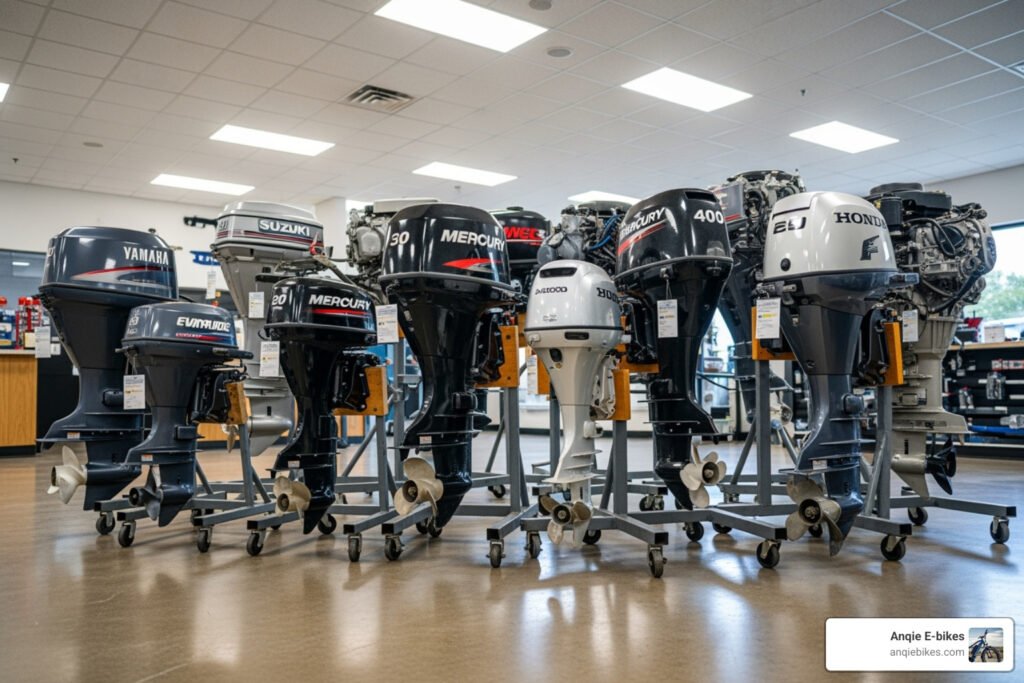
Used marine outboard engines for sale offer a smart way to power your vessel without breaking the bank. Online marketplaces, local dealerships, and specialized sites list everything from budget-friendly 25HP motors to powerful 300HP+ engines at a fraction of new prices. For example, a 2015 Yamaha 115HP 4-stroke that was over $10,000 new can often be found for around $5,200 used. Popular brands like Yamaha, Mercury, Suzuki, and Honda are widely available.
Top places to find used marine outboard engines for sale:
- Online Marketplaces like eBay, Boat Trader, Facebook Marketplace, and Craigslist
- Specialized Marine Dealerships for professional inspections and warranties
- Marine Scrapyards for parts and budget options
The key is knowing what to look for. Engine hours, saltwater versus freshwater use, maintenance records, and compression test results all impact an engine’s value and reliability. Most reputable dealers perform full inspections and often back their engines with warranties for peace of mind.
I’m mArk saToshi, and with years of experience in the marine and recreational vehicle market, I’ve helped many boaters steer the process of finding quality used marine outboard engines for sale. This guide will walk you through every step, from understanding specs to spotting red flags and negotiating a fair price.
Why Choose a Used Outboard? The Smart Boater’s Advantage
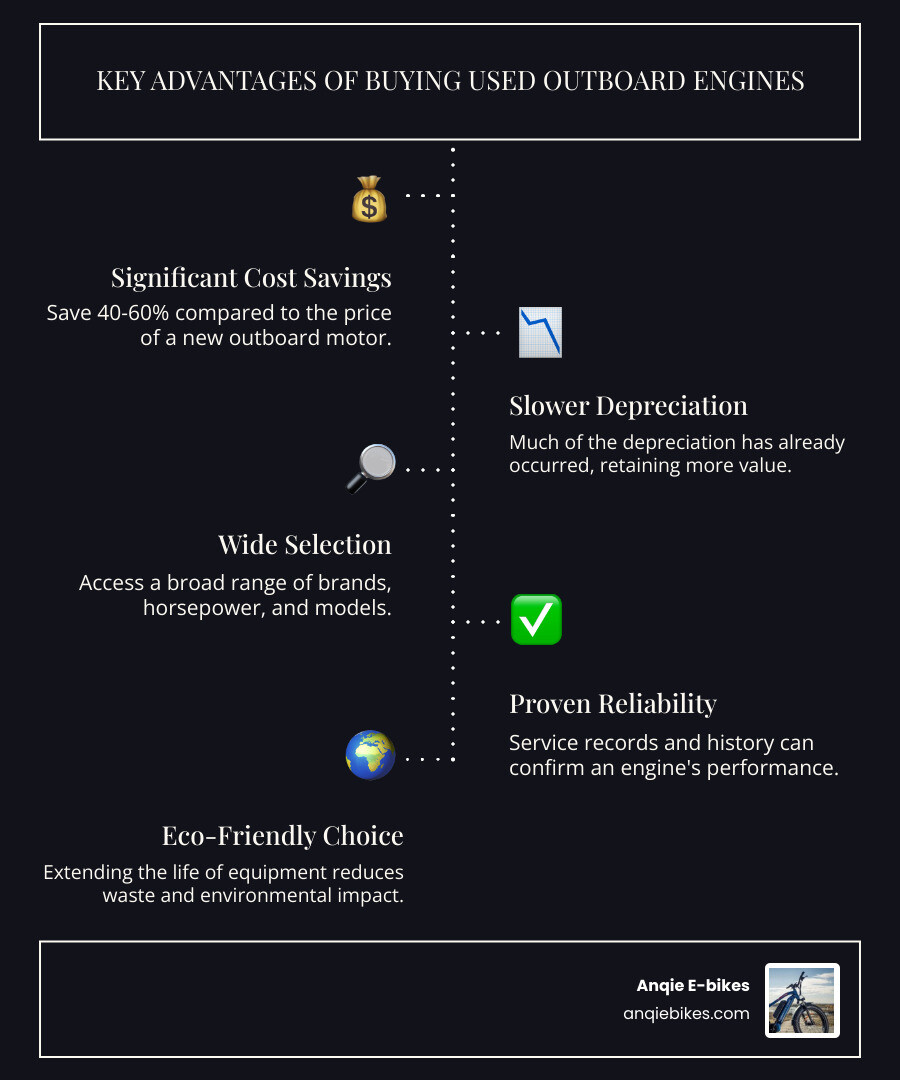
Choosing a used marine outboard engine for sale is a smart financial decision that benefits your wallet and your time on the water. Here’s why going the pre-owned route is a brilliant idea.
First, the significant cost savings are undeniable. A used model can be had for a fraction of a new one’s price, leaving more in your budget for fuel, gear, and accessories. Furthermore, new engines depreciate quickly; when you buy used, the original owner has absorbed that initial loss, so your investment holds its value better.
Many used outboards offer proven reliability. A well-maintained used engine has a track record. Any manufacturing quirks have likely been addressed, and a solid service history can make it just as dependable as a new motor.
The used market also provides a wider selection. You aren’t limited to current-year models. You’ll find a vast range of past models, technologies (like 2-stroke and 4-stroke options), and horsepower ratings, making it easier to find the perfect engine for your specific boat and needs.
Finally, choosing used is an eco-friendly choice. Giving an existing engine a new life reduces manufacturing demand and waste, which is a win for both your wallet and the environment.
Decoding the Specs: Horsepower, Age, and Hours
Understanding the key specifications is crucial when searching for used marine outboard engines for sale.
Horsepower (HP) matching is vital for safety and performance. Your boat has a capacity plate, usually near the helm, that lists the maximum recommended horsepower. Using an engine that is too powerful can damage the transom and create unsafe handling, while an underpowered engine will feel sluggish. Always stay within the manufacturer’s recommended range.
| Horsepower Range | Typical Boat Size/Type | Common Uses |
|---|---|---|
| Under 10 HP | Small dinghies, canoes, kayaks, tenders | Auxiliary power, slow cruising, fishing in calm waters |
| 10-25 HP | Small fishing boats, jon boats, inflatables | Freshwater fishing, small lake cruising, tenders |
| 25-50 HP | Aluminum fishing boats, small skiffs, pontoon boats | Inshore fishing, family cruising on lakes/rivers |
| 50-115 HP | Mid-size fishing boats, bowriders, larger pontoon boats | Coastal fishing, watersports, family cruising |
| 150+ HP | Offshore fishing boats, large runabouts, performance boats | Offshore cruising, high-speed watersports, heavy loads |
Engine hours are like a car’s mileage—lower hours generally mean less wear. However, context is key. An engine with higher hours but a perfect maintenance history can be a better buy than a low-hour engine that has been neglected or sat unused for years, which can cause its own problems.
The Model year indicates the engine’s technology. Newer models often have better fuel efficiency and electronics, while older models can be simpler and more affordable to repair.
Shaft length must match your boat’s transom height for proper performance. An incorrect length can cause the propeller to perform poorly or even damage the engine.
- Short shaft: ~43 cm (17 inches)
- Long shaft: ~51 cm (20 inches)
- Extra long (XL) shaft: ~63 cm (25 inches)
- XXL/XXXL shaft: ~76 cm (30 inches) or longer for very large boats.
Always measure your boat’s transom from the top of the mount to the bottom of the hull to ensure a correct fit.
2-Stroke vs. 4-Stroke: Which Engine Is Right for You?
One of the biggest decisions is choosing between a 2-stroke or a 4-stroke engine. Each has distinct advantages for different boaters.
2-Stroke Engines:
- Pros: Lightweight, high torque for quick acceleration, and often simpler and cheaper to repair (especially older models).
- Cons: Older models are less fuel-efficient, produce more emissions and smoke, and are generally louder.
4-Stroke Engines:
- Pros: Very quiet, highly fuel-efficient, produce low emissions, and offer smooth power delivery. They are the modern standard for a reason.
- Cons: Heavier than comparable 2-strokes, and their complexity can sometimes lead to higher repair costs.
Your choice should depend on your boat’s weight capacity, primary use (e.g., watersports vs. cruising), budget, and how much you value quiet operation.
Spotting Red Flags: Common Issues in Used Outboard Engines
When inspecting used marine outboard engines for sale, play detective to avoid costly problems.
- Corrosion: This is the number one enemy. Look for pitting, bubbling paint, or white powder on the powerhead, mid-section, and lower unit. Check bolts and electrical connections carefully.
- Saltwater vs. freshwater use: Freshwater engines typically have less corrosion. If used in saltwater, ask about the flushing routine and anode replacement.
- Compression test importance: Always request a compression test. Consistent, strong readings across all cylinders indicate a healthy engine. Inconsistent or low readings are a major red flag for internal damage.
- Lower unit inspection: Check for impact damage, a bent skeg (the bottom fin), or cracks. When the gear oil is changed, milky oil means water intrusion, which is a serious issue.
- Propeller condition: Dings or bends suggest an impact that could have damaged the prop shaft or internal gears.
- Cowling damage: Significant cracks could indicate the engine was dropped or in a collision. Look inside for oil residue or grime that might signal leaks.
- Worn electrical wiring: Frayed or corroded wires are a fire hazard and can cause frustrating electrical problems.
- Fuel system clogs: An engine that has sat with old fuel can have gummed-up carburetors or injectors. Ask when it was last run and how it was stored.
Where to Find Used Marine Outboard Engines for Sale
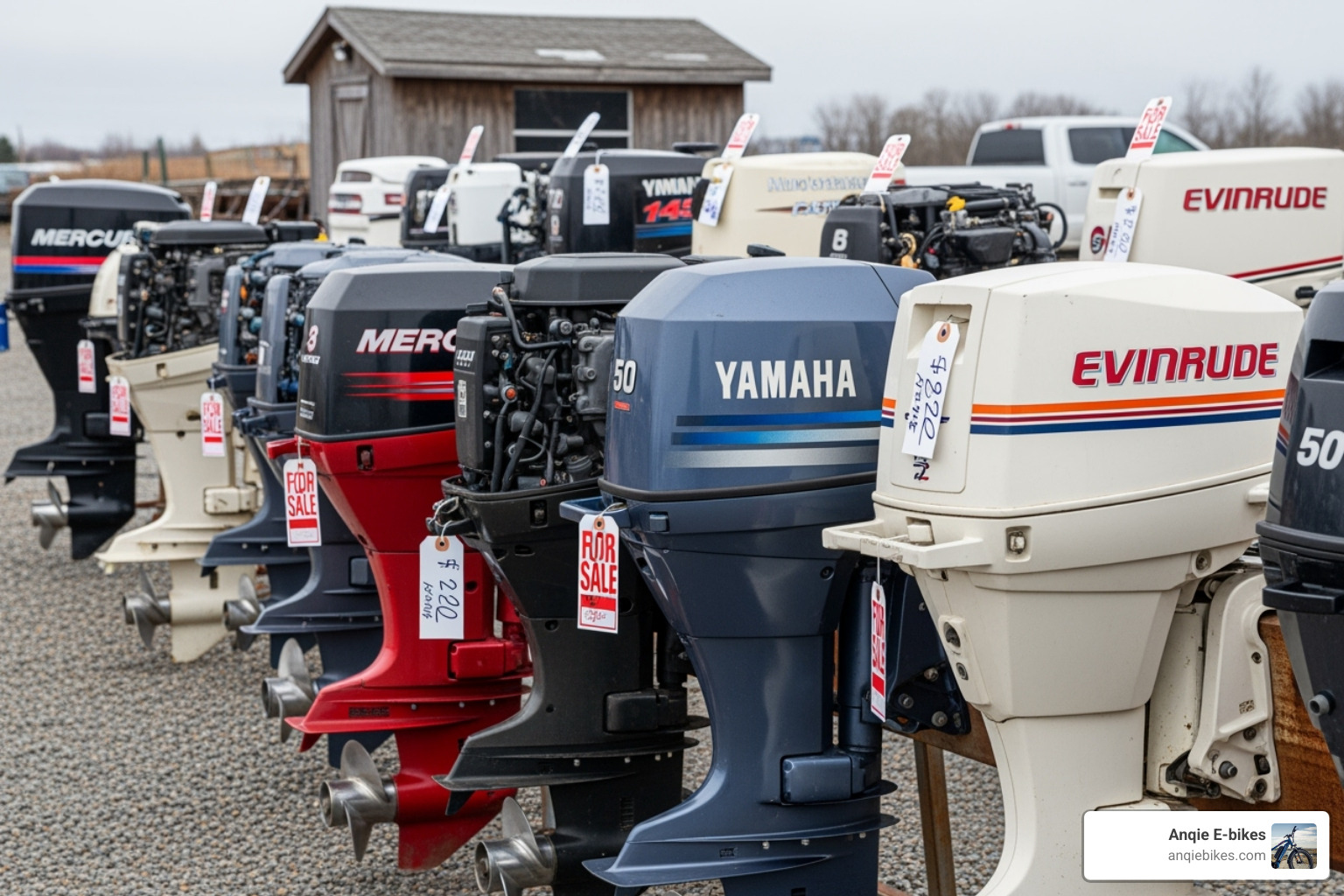
Finding the perfect used marine outboard engine for sale is easier than ever, with numerous options available for every budget and preference. From vast online marketplaces to trusted local dealerships, here are the best places to start your search.
Online Marketplaces: A World of Options
Online platforms offer an incredible selection of used marine outboard engines for sale right from your home.
eBay is a giant in this space, with thousands of listings for complete outboard engines. You can find everything from small kickers to powerful offshore motors. Look for sellers with top ratings and be aware of the platform’s buyer protection policies.
Boat Trader is a go-to spot for boaters, offering a specialized search experience. You can easily filter by location, price, year, and horsepower to narrow down your choices quickly.
Facebook Marketplace and Craigslist are excellent for finding local deals from private sellers. These platforms allow direct communication and the potential for great prices. However, buyer protection is limited, so thorough in-person inspections are essential.
Reputable Dealerships and Marine Shops
For a more structured buying experience with added peace of mind, reputable dealerships are an excellent choice for finding used marine outboard engines for sale.
Dealerships often offer certified pre-owned motors that have undergone rigorous inspections and necessary repairs. A key advantage is the inclusion of a warranty, which can range from 90 days to 12 months. This is a significant benefit over private sales, which are typically sold “as-is.”
Here at Anqie E-bikes, our marine retail division is a fantastic place to find both new and pre-owned outboard motors. With locations in Brooklyn, NY, and other parts of New York, USA, our team provides exceptional customer service and expert guidance. Our unique selling proposition includes a comprehensive product range and strong after-sales support. Our used outboards are often serviced by professional marine mechanics with over 25 years of experience, ensuring you get a thoroughly vetted and reliable product. We also provide rigging services for proper installation and may offer trade-in options for your old motor.
Finding the best deals on used marine outboard engines for sale
Beyond the usual spots, a few other strategies can help you find exceptional deals on used marine outboard engines for sale.
Private sellers can offer the best prices because they don’t have dealership overhead. This route requires more due diligence from you, including asking for maintenance records and performing a thorough inspection.
Marine scrapyards can be treasure troves for parts motors or complete engines that need some work. If you’re handy with a wrench, the savings can be significant.
End-of-season sales in the fall and winter are a prime time to find deals, as sellers look to offload inventory before winter storage.
Local boating forums and clubs are great resources for finding equipment sold by fellow enthusiasts and for getting recommendations on reputable sellers or mechanics in your area.
Sealing the Deal: Pricing, Questions, and Post-Purchase Care
You’ve researched, inspected, and are ready to choose from the available used marine outboard engines for sale. This final stage involves securing a fair price, asking the right questions, and planning for post-purchase care to ensure your engine provides years of reliable service.

How to Determine a Fair Price for a used marine outboard engines for sale
Figuring out the right price for a used marine outboard engine for sale requires some research.
First, consult NADA Guides (J.D. Power Boats) for boats and engines. While primarily used by dealers, they provide a solid baseline for a specific model’s value. Next, compare online listings on platforms like eBay and Boat Trader, as well as dealership sites like Anqie E-bikes. Look for engines with similar horsepower, age, brand, and condition to establish a realistic price range.
Always factor in the engine’s condition and hours. A well-maintained, low-hour engine will command a higher price than a neglected one. For example, a “USED FRESH WATER 2009 MERCURY 50HP 2-STROKE 20″ OUTBOARD BOAT MOTOR ENGINE” listed for $3,950 highlights the value of freshwater use.
Here are some general price ranges by HP to guide you:
- Under 25 HP: $500 to $3,000. A Used Suzuki Outboard Motor DF2.5S5 might be $450, while a newer small HP motor could approach $2,600.
- 50-115 HP: $2,000 to $7,000. A 2002 Yamaha 50 hp 4-stroke might be $2,400, while a 2015 Yamaha 115 HP 4-Stroke could be $5,200.
- 150 HP+: $4,000 to well over $20,000. A 2005 Evinrude 200 HP 2 Stroke might be $4,700, while a set of Used Twin Suzuki 350 hp 2022 Dual Prop engines could be $28,950.
These are estimates, and brands like Yamaha, Mercury, Suzuki, and Honda often hold their value well. Don’t be afraid to negotiate, especially with private sellers.
Essential Questions to Ask the Seller
Before finalizing the deal on any used marine outboard engines for sale, ask the seller these key questions to understand the engine’s history:
- What is the engine’s maintenance history, and can I see the service records?
- Why are you selling the engine?
- Has the engine been used primarily in saltwater or freshwater?
- Have there been any major repairs or rebuilds? If so, who did the work?
- Are there any known issues, even minor ones?
- How many hours are on the engine?
- When was its last full service, and what was included?
- Can I hear the engine run or, ideally, test it on the water?
- What is the shaft length?
- Are accessories like the propeller, controls, or gauges included?
Asking these questions helps you make an informed decision and shows you’re a serious buyer.
First Steps After Your Purchase: Essential Maintenance
Congratulations on your purchase! Before hitting the water, we recommend performing some key maintenance tasks on your used marine outboard engine for sale, even if it was recently serviced. This establishes a baseline for future care and ensures reliability.
- Perform a Full Service: For a 4-stroke, change the engine oil and filter. For all engines, install new spark plugs and replace all fuel filters.
- Service the Lower Unit: Drain and replace the gear lube. Check the old lube for a milky appearance (water intrusion) or metal shavings (gear wear), which could indicate serious problems.
- Replace the Impeller: This small rubber part is critical for engine cooling. Unless you have proof it was just replaced, change it. Impeller failure can cause catastrophic engine damage.
- Check the Anodes: These sacrificial metal parts protect your engine from galvanic corrosion. Replace any that are more than half-worn.
- Get a Professional Tune-Up: Consider having a trusted marine mechanic inspect your engine. They can spot subtle issues and ensure everything is in top running condition. A small investment now can prevent major repairs later.
Frequently Asked Questions about Used Outboard Motors
What are the most reliable used outboard engine brands?
When shopping for used marine outboard engines for sale, four brands consistently stand out for their dependability: Yamaha, Honda, Suzuki, and Mercury.
- Yamaha engines are legendary for their durability and strong performance. They hold their resale value exceptionally well, reflecting their market reputation.
- Honda applies its automotive engineering excellence to its outboards, which are known for being quiet, fuel-efficient, and reliable.
- Suzuki has earned a strong reputation for innovative, powerful, and efficient designs, offering great value and reliability.
- Mercury is a dominant market player with a wide range of motors, from durable FourStrokes to high-performance Verados, all supported by a vast dealer network for parts and service.
However, a brand name is only part of the equation. An engine’s maintenance history is more important than its brand. A well-maintained engine from any reputable manufacturer can be a reliable purchase. Always research the specific model and year you are considering.
Can I get a warranty on a used outboard motor?
Yes, you can, and it’s a significant advantage of buying from a reputable dealership. When you purchase used marine outboard engines for sale from a dealer, warranty protection is often included.
At Anqie E-bikes, our marine division typically offers a 90-day warranty on used engines (30 days for commercial use), with options for extended coverage on some models. This provides peace of mind and protects your investment.
In contrast, private sales are almost always “as-is.” This means that once you buy the engine, any subsequent problems are your responsibility. While private sales can offer lower prices, you assume all the risk. This makes thorough inspections and compression tests absolutely critical when buying from a private party.
How many hours is too many for a used outboard?
There is no single magic number for what constitutes “too many” hours on used marine outboard engines for sale. The answer depends heavily on the engine type and its maintenance history.
Modern 4-stroke outboards are very durable, often reaching 2,000 to 3,000 hours with proper care. Some commercial engines even exceed 5,000 hours. An engine with 500-1,000 hours can be considered to have plenty of life left. Newer direct-injected 2-stroke engines can have similar lifespans.
The most crucial factor is maintenance, not hours. An engine with 1,500 hours and meticulous service records is often a better buy than a neglected 500-hour engine. How the engine was used also matters. Hours from leisurely recreational use are less stressful on an engine than hours from demanding commercial work.
Don’t be automatically deterred by higher hours. Evaluate the complete picture: maintenance records, compression results, visual condition, and how it was used. A well-cared-for, higher-hour engine can represent excellent value.
Conclusion
We’ve steerd the key aspects of finding the perfect used marine outboard engine for sale. Armed with this knowledge, you can confidently make a smart investment. From decoding specs and spotting red flags to knowing where to look and what to ask, you are prepared to find a great deal.
Your best tools are patience and due diligence. A thorough inspection and a few key questions can lead you to a purchase that offers an incredible blend of value and reliable performance. A carefully chosen used outboard is your ticket to years of enjoyment on the water without the steep price of a new engine.
You are now well-equipped to find the ideal motor for your next aquatic adventure. Happy boating!