
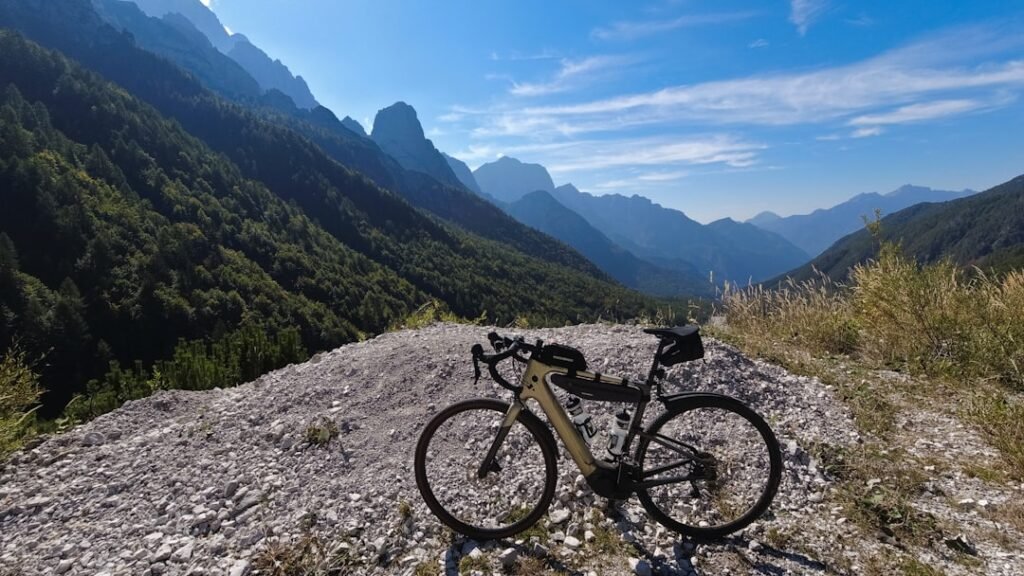
Why Mountain Bikes Are Your Gateway to Adventure

Mountain bikes are specialized off-road bicycles designed for rugged terrain. Understanding the different types is key to finding the right one for your adventures. Here’s a quick overview:
Key Mountain Bike Categories:
- Hardtail: Front suspension only. Great for climbing and smoother trails ($500-$3,000).
- Full-Suspension: Front and rear shocks for maximum control on technical terrain ($2,000-$14,000+).
- Cross-Country (XC): Lightweight and efficient for long-distance racing (100-120mm travel).
- Trail: Versatile all-rounders for mixed terrain (120-150mm travel).
- Enduro: Downhill-focused with climbing capability (150-170mm travel).
- Electric Mountain Bikes (eMTBs): Pedal-assist motors for extra power on climbs and longer rides.
The global mountain bike market is booming, projected to reach $87.5 billion by 2032, largely driven by the rise of eMTBs. Whether you’re a beginner or a seasoned pro, knowing about frame materials, suspension, and drivetrains will help you choose wisely. At Anqie E-Bikes, we help riders find high-performance solutions for their adventures, from entry-level hardtails to cutting-edge electric mountain bikes.
Understanding the Different Types of Mountain Bikes
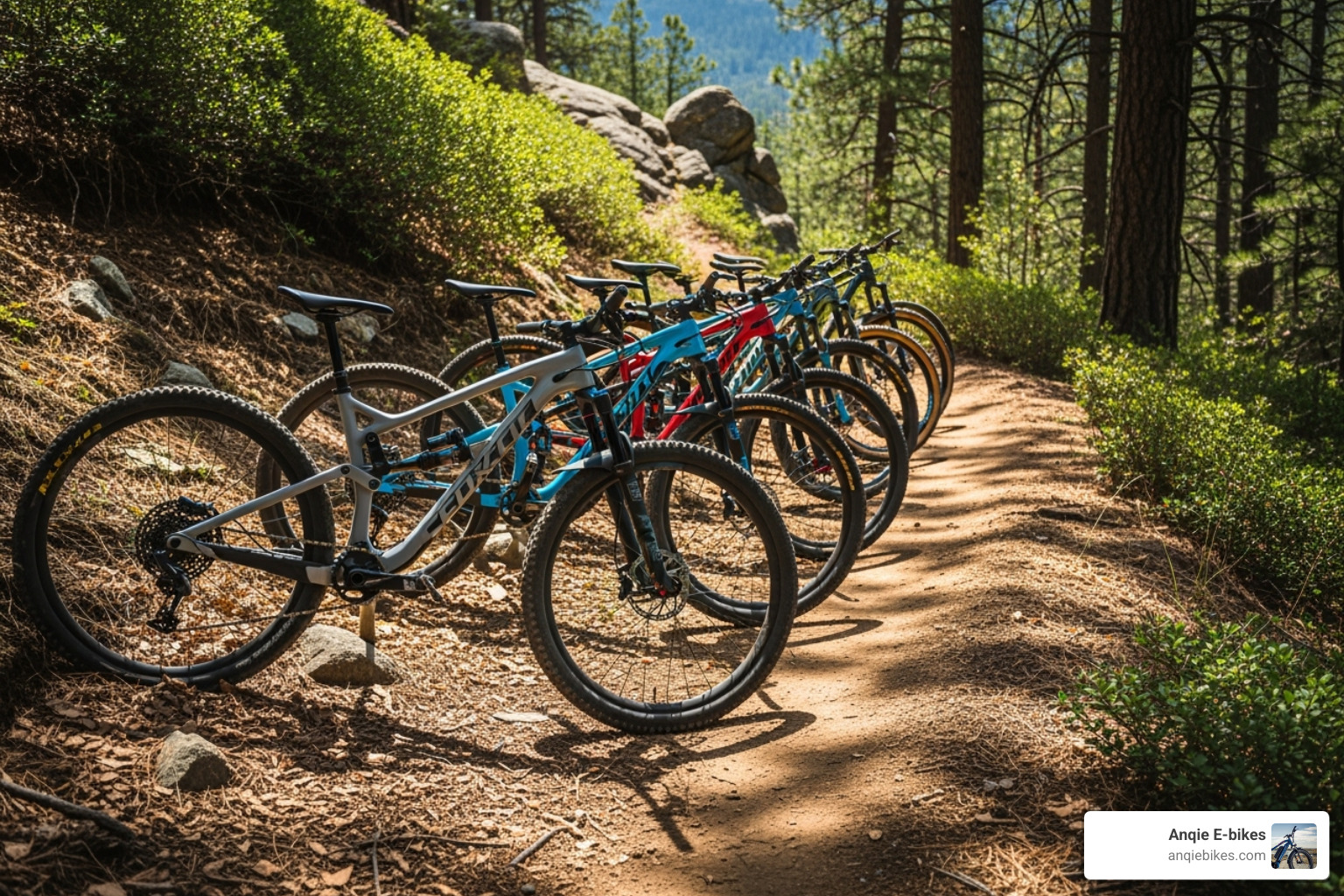
Mountain bikes are a diverse family, each designed for a specific type of off-road riding. Choosing the right one makes all the difference on the trail, whether you’re tackling steep climbs or technical descents.
Hardtail vs. Full-Suspension: What’s the Difference?
This is the first major decision for most riders.
Hardtail bikes have a suspension fork at the front but a rigid rear frame. This simpler design makes them lighter, more efficient for climbing, and easier to maintain. Power goes directly to the rear wheel, making them fast on smoother trails and nimble on climbs. They are also more affordable, typically ranging from $500 to $3,000, making them a great choice for beginners and cross-country riders.
Full-suspension bikes have both a front fork and a rear shock, allowing both wheels to absorb impacts. This provides incredible traction, better control, and a more comfortable ride on rough terrain. While heavier and requiring more maintenance, the added suspension is invaluable on technical descents and rock gardens. Prices start around $2,000 and can exceed $14,000 for high-end models.
Here’s how they stack up:
| Feature | Hardtail Bikes | Full-Suspension Bikes |
|---|---|---|
| Cost | Generally lower ($500-$3,000) | Higher ($2,000-$14,000+) |
| Maintenance | Lower, fewer moving parts | Higher, more complex suspension components |
| Ideal Terrain | Smoother trails, climbs, cross-country | Technical trails, descents, rough terrain |
| Climbing | Very efficient, direct power transfer | Good, but some energy lost to suspension |
| Descending | Less forgiving, more rider skill required | More forgiving, better control and comfort |
| Weight | Lighter | Heavier |
| Beginner-Friendly | Highly, teaches fundamental skills | Yes, provides more confidence on rough terrain |
Cross-Country (XC) Bikes
XC bikes are the marathon runners of the MTB world, built for speed and efficiency over long distances. They feature lightweight frames and short suspension travel (100mm-120mm) for quick acceleration and efficient pedaling. Their design excels at climbing, making them ideal for racing and all-day epic rides.
Trail Bikes
If you could only own one mountain bike, a trail bike would be a smart choice. These are true all-rounders, striking a sweet spot between climbing efficiency and downhill capability. With suspension travel from 120mm to 150mm, they absorb bumps without feeling sluggish on climbs. Their balanced geometry makes them stable on descents yet agile on twisty singletrack, making them the perfect first full-suspension bike for many riders.
Enduro Bikes
Enduro bikes are for riders who live for the downhill but need to pedal to the top. Originating from Enduro racing, these bikes shine on descents. With long suspension travel (150mm-170mm) and slack geometry for stability at speed, they are built to handle aggressive riding, big hits, and steep, rocky terrain.
The Rise of Electric Mountain Bikes (eMTBs)
Electric mountain bikes are revolutionizing the sport. An eMTB integrates a pedal-assist motor that boosts your pedaling power, making steep climbs manageable and long distances feel shorter. This doesn’t mean the bike rides itself—you still pedal, but with an extra push.
eMTBs make mountain biking more accessible to all fitness levels, let you keep up with faster friends, and extend your range for bigger adventures. The market has responded, with eMTB sales growing rapidly.
Ready to experience the thrill of the trail with an extra boost? Explore our full range of Mountain Bikes at Anqie E-bikes, including many fantastic eMTB options that can transform your riding experience.
Decoding the Components: What Makes a Mountain Bike Tick?
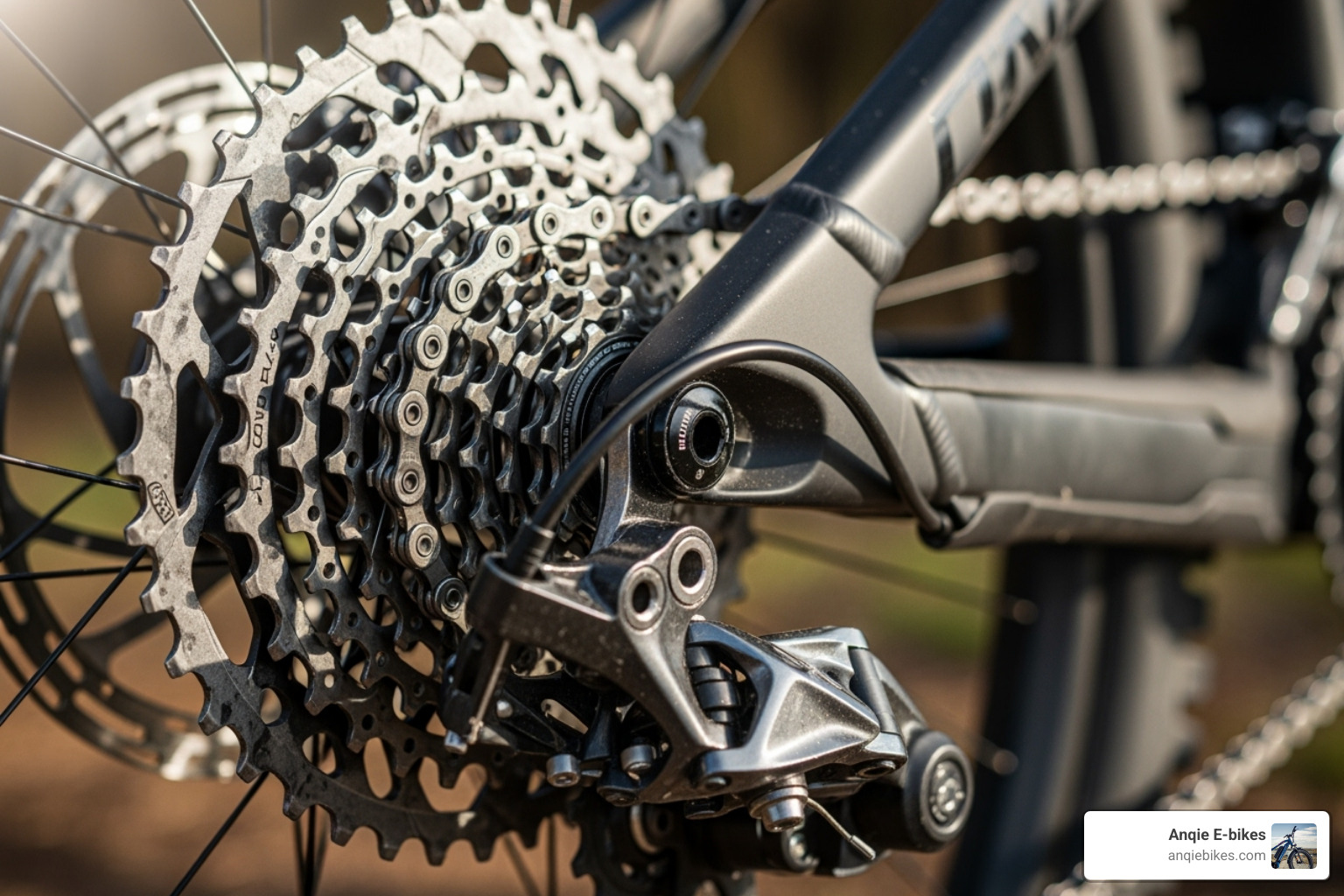
Understanding a mountain bike’s key components helps you appreciate its performance and make an informed choice. From the frame to the gears, every part plays a vital role in your ride.
Frame Materials
The frame is the bike’s skeleton, and its material impacts weight, ride quality, and cost.
- Aluminum: The workhorse material for most mid-range bikes. It’s lightweight, stiff, and affordable, offering a responsive ride without a premium price tag.
- Carbon Fiber: The choice for performance enthusiasts. It’s incredibly light and strong, allowing for frames that are stiff yet comfortable. Carbon dampens trail vibrations but comes at a higher cost.
- Titanium: Known for creating “forever bikes.” It has an exceptional strength-to-weight ratio, a compliant ride feel, and is corrosion-resistant. It is, however, very expensive.
- Steel: An old-school material that’s still valued for its durability and classic, compliant ride feel, though it’s heavier than aluminum or carbon.
Suspension System
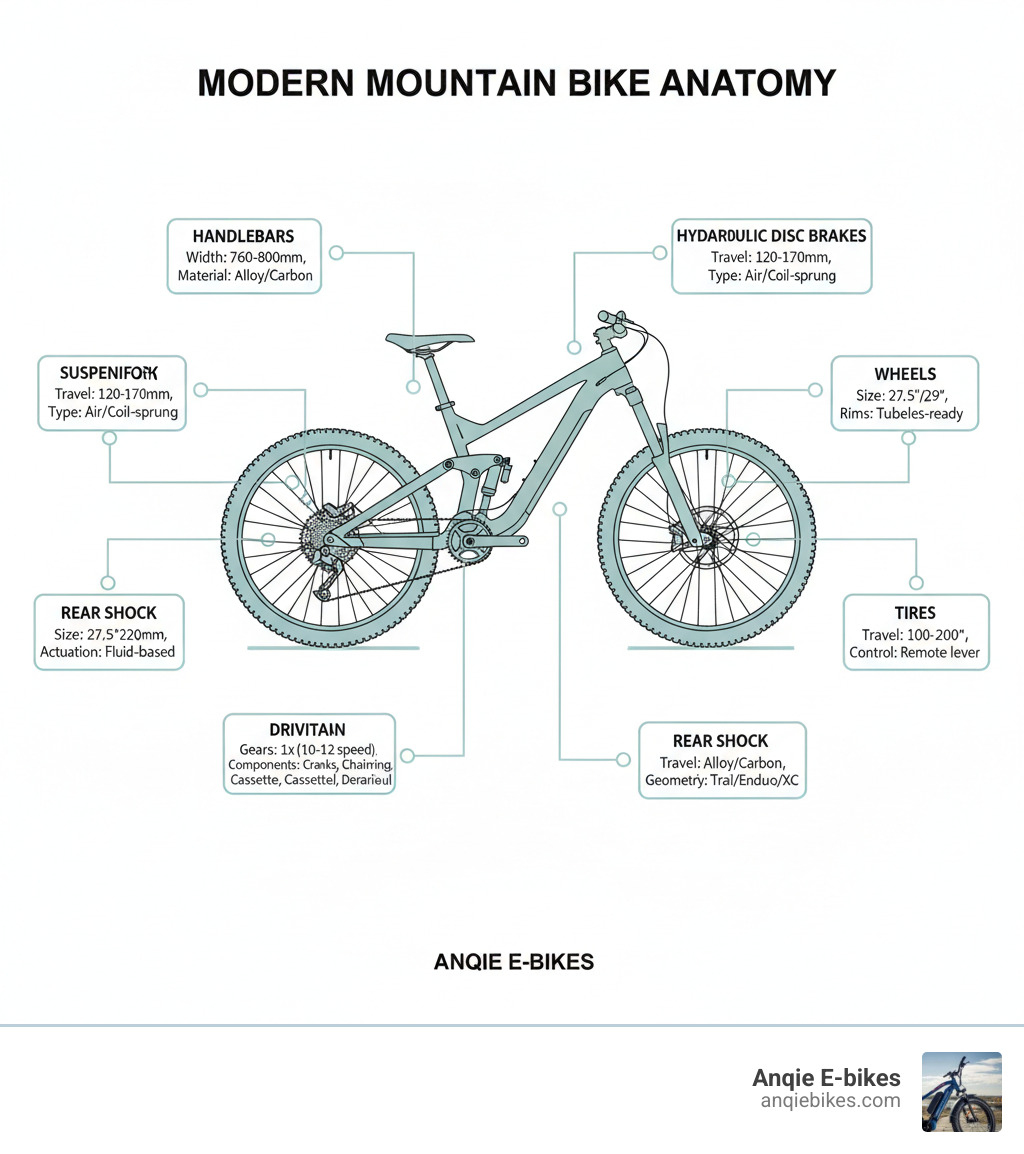
The suspension is what allows mountain bikes to tackle rough terrain. It consists of a front suspension fork and, on full-suspension bikes, a rear shock.
The key measurement is travel—how far the suspension can compress (in mm). More travel (e.g., 170mm on an enduro bike) handles bigger hits, while less travel (e.g., 100mm on an XC bike) is lighter and more efficient for climbing. Forks use either lightweight, adjustable air springs or more sensitive coil springs.
Damping adjustments (compression and rebound) let you fine-tune how the suspension reacts to bumps. On full-suspension bikes, the rear shock and frame linkage design are engineered to balance pedaling efficiency with bump absorption.
Drivetrain and Brakes
These components control your speed.
The drivetrain transfers pedaling power to the rear wheel. Most modern mountain bikes use 1x (“one-by”) drivetrains, with a single front chainring and a wide-range rear cassette. This simplifies shifting, reduces weight, and improves chain retention on rough trails. SRAM and Shimano are the dominant brands.
Hydraulic disc brakes are standard for their superior stopping power and consistent performance in all conditions. Larger rotors (e.g., 180mm or 203mm) provide more power and better heat dissipation, making them ideal for aggressive descending.
How to Choose the Right Mountain Bike for You
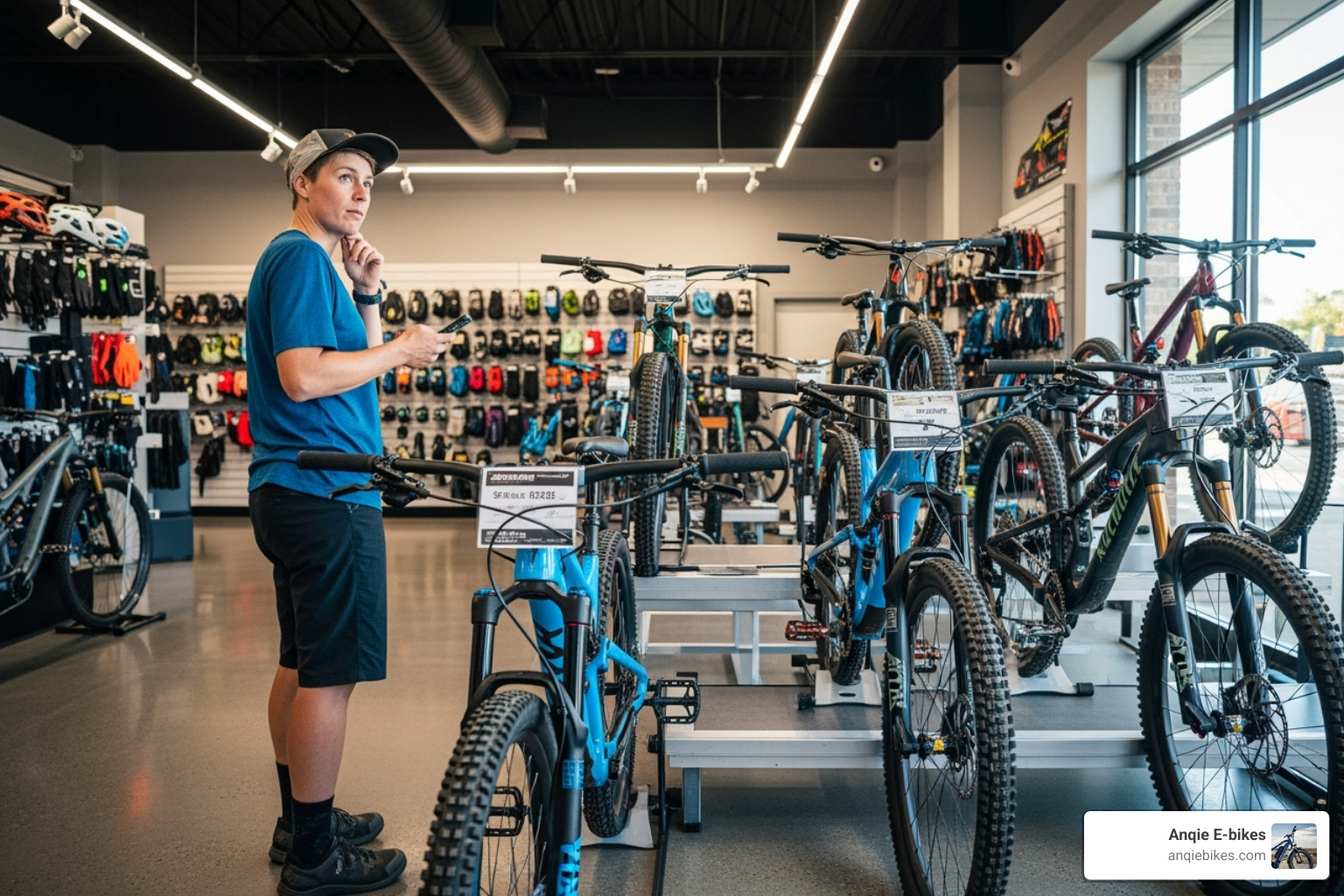
Finding the perfect mountain bike is about matching the bike to your riding style, local trails, and budget. It’s about finding a partner that makes every ride more enjoyable.
Assess Your Riding Style and Terrain
The trails you ride should be your primary guide.
- Flowy singletrack: An XC or trail bike will feel fast and responsive.
- Technical rock gardens and roots: A full-suspension trail or enduro bike offers the extra cushion and control you’ll need.
- Bike park jumps and gravity features: An enduro or downhill bike is built to handle big hits and high speeds.
- All-day epic rides: A capable trail bike offers a balance of climbing and descending. An eMTB is also a fantastic option here, as the pedal-assist motor helps you cover more ground with less fatigue.
Choosing a bike that suits your terrain is the most important step.
Consider Your Experience Level and Budget
There’s a great mountain bike at every price point.
- Beginner ($500-$2,000): This range offers excellent entry-level hardtails and full-suspension bikes. They are durable and provide everything you need to learn and progress.
- Intermediate ($2,000-$5,000): Here you’ll find premium aluminum or entry-level carbon frames with better suspension and components, translating to noticeable performance gains on the trail.
- Expert ($5,000+): These are top-tier machines with lightweight carbon frames, advanced suspension, and electronic shifting. They are worth it for racing or if you simply want the best performance available.
Your goal is to find a bike that offers solid value and matches your current and future riding goals.
The Critical Importance of Proper Bike Fit and Sizing
Proper bike fit is absolutely critical for comfort, control, and safety. An ill-fitting bike can cause everything from back pain and numb hands to a lack of control on technical trails.
Manufacturer frame size charts based on your height are a good starting point. However, reach and stack measurements are also important, as they determine your riding position. Nothing replaces a test ride to see how a bike actually feels.
Ignoring fit can lead to discomfort and even chronic injuries. We strongly encourage consulting a sizing guide or speaking with an expert. A comfortable rider is a confident rider, and that’s what makes mountain biking fun.
The World of Mountain Biking: Benefits, Trends, and Gear
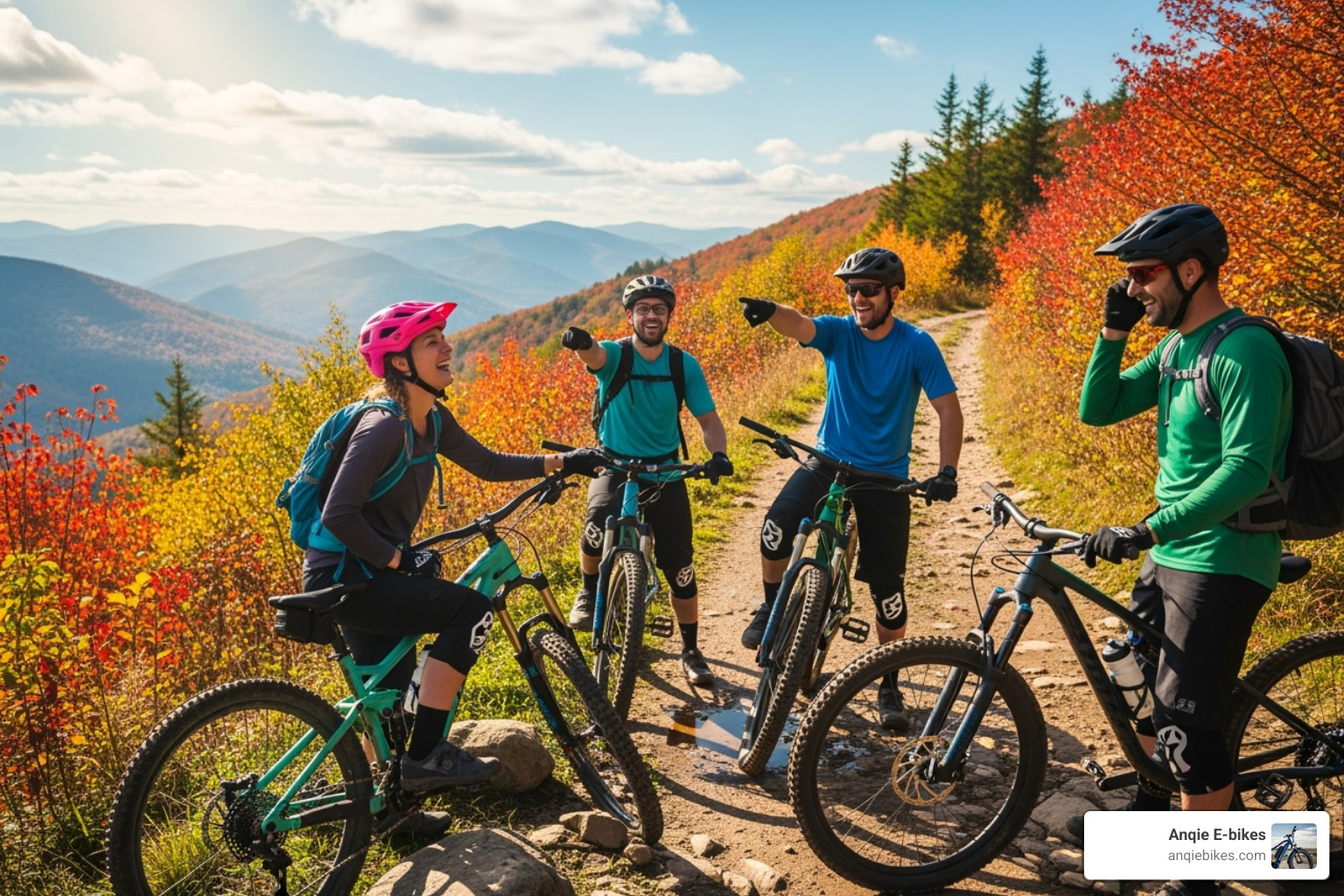
Mountain biking is more than a sport—it’s a lifestyle that offers a unique blend of physical challenge, mental focus, and outdoor adventure.
The Health and Recreational Benefits of Mountain Biking
Mountain biking is a fantastic full-body workout that improves cardiovascular fitness, strength, balance, and coordination. The intense focus required on the trail acts as a form of moving meditation, clearing your mind and reducing stress.
Being out in nature provides a powerful mood boost, and the camaraderie among riders builds a strong sense of community. It’s an activity that benefits both physical and mental well-being.
Evolution and Current Trends in the Industry
The mountain bike industry is constantly innovating. A major trend is “longer, lower, slacker” geometry, which makes bikes more stable and confidence-inspiring on steep descents.
In terms of wheel sizes, 29-inch wheels are popular for their ability to roll over obstacles easily, while mixed-wheel “mullet” setups (29″ front, 27.5″ rear) offer a blend of stability and agile handling.
Technology like electronic shifting and dropper seatposts (which let you adjust saddle height on the fly) have become common, genuinely improving the riding experience and making bikes more capable than ever.
Essential Gear and Accessories for Your Ride
The right gear is crucial for safety and comfort. Here are the essentials:
- Safety Gear: A proper helmet is non-negotiable. Gloves and eye protection are also highly recommended.
- Apparel: Padded shorts make a huge difference in comfort on long rides.
- Hydration: Carry water in a hydration pack or frame-mounted bottles.
- Repair Kit: Be prepared for mechanical issues with a multi-tool, tire pump, and a spare tube or tubeless repair kit.
- Footwear: Use dedicated mountain bike shoes for flat or clipless pedals.
Always keep your gear in top condition and check for any important product updates or safety notices. Being prepared lets you focus on enjoying the ride.
Frequently Asked Questions about Mountain Bikes
Here are answers to some of the most common questions we hear from riders.
What are the top mountain bike brands?
The mountain bike world includes global powerhouses like Trek, Specialized, and Giant, known for innovation and value. Cannondale and Scott are recognized for performance-focused designs, while brands like Santa Cruz, Pivot, and Yeti specialize in high-end, boutique bikes.
At Anqie E-bikes, we carefully curate a selection from leading brands to ensure quality and performance. Whether you’re interested in a specific model or want to explore various options, we can guide you. Browse our complete collection of Mountain Bikes to see what we have in stock.
How often should I service my mountain bike?
Regular maintenance is key to performance and longevity.
- Before every ride: Check your brakes, tire pressure, and wheel security.
- After messy rides: Clean your bike, especially the drivetrain, and lubricate the chain.
- Monthly: Inspect brake pads, tires, and bolts for wear or looseness.
- Annually: Get a professional tune-up. A mechanic can service suspension, bleed brakes, and ensure everything is perfectly dialed in.
For more tips, consult with our experts at Anqie E-bikes or check out our maintenance resources.
Can I use a mountain bike for commuting on the road?
Yes, but with trade-offs. A mountain bike’s knobby tires, suspension, and heavier frame make it less efficient on pavement compared to a road or hybrid bike. However, its durability and comfortable riding position are great for rough city streets.
To make commuting easier, you can swap to smoother tires and use your suspension’s lockout feature on flat roads. While not as fast as a dedicated commuter, a mountain bike is a versatile option for riders who split their time between trails and pavement.
Conclusion: Your Adventure Awaits
From hardtails to full-suspension rigs, and from XC to enduro, mountain biking is diverse and exciting. We’ve covered how to choose a bike based on type, components, fit, and your personal riding style. With innovations like eMTBs making the sport more accessible than ever, there’s a perfect bike out there for everyone.
Choosing a mountain bike is about finding a machine that empowers you to ride with confidence and joy. It’s about matching the bike to your terrain and goals.
At Anqie E-bikes, we believe the right bike transforms your experience on the trail. Based in Brooklyn, NY, we are dedicated to providing high-quality mountain bikes and expert guidance to help you find that perfect match. We’re here to answer your questions and support you long after your purchase.
Your adventure is waiting. Every ride is an opportunity to challenge yourself, connect with nature, and experience the joy of two wheels on dirt.
Ready to take the next step? Explore our range of electric bikes to power up your next trail adventure, or browse our full selection of Mountain Bikes to find your perfect ride. The trails are calling.
Pingback: Bargain Bikes for Adults: Uncovering the Best Cheap Electric Rides - Anqi E-Bike